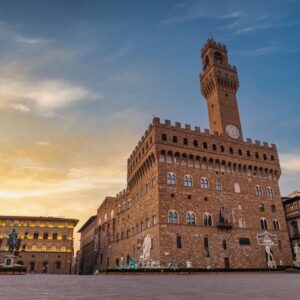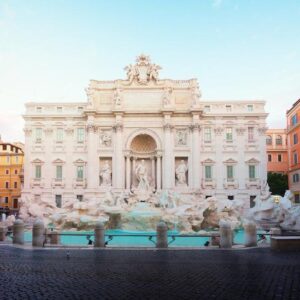

Rome is a continuous discovery: everything in the historic center, from the symbols of the eternal city such as the Colosseum or the Pantheon or the Trevi Fountain, to the most evocative views like the Gianicolo, the Orange Garden, and the Capitol, is tangible evidence of the multitude of events that have layered over the centuries, creating today that unique world humus on which Rome continues to thrive.
Trajan’s Column: A Testament to Rome’s Imperial Glory
If you find yourself near the Imperial Forums and the Colosseum and are passionate about the history of ancient Rome and the magnificence of its vast Empire, Trajan’s Column is undoubtedly one of the monuments that cannot be missed in your walking tour.
This monument is located next to the Ulpia Basilica.
Unraveling the Story: Bas-Reliefs and Propaganda on Trajan’s Column
The monument was erected between 107 and 113 AD; it was commissioned by Emperor Trajan to celebrate and commemorate the conquest of Dacia, present-day Romania.
But what is the peculiarity of this 40-meter-high monument? Its absolute uniqueness lies in the friezes that spiral along the entire length of the column, narrating, like a story, the heroic deeds of the Roman people and Trajan during the victorious military campaigns to conquer Dacia. Each frieze, created using bas-relief technique, depicts a significant moment in the battle: in fact, this narrative represents one of the first propaganda tools ever devised.
An important testimony
Every scene depicted on the column represents a specific moment in the military campaign, from preparations to the actual battle, to the triumph.
What stands out are the details of the bas-reliefs, which intricately portray moments of the troops’ daily life during the long weeks away from Rome. These details have provided scholars with important insights into the daily habits of the Roman people, from clothing to food, from the types of weapons used to the military tactics of the time.
Exploring Trajan’s Column from Base to Summit
Even from an architectural point of view, the Column is an exemplary monument from various perspectives. Built from 18 stacked blocks, the material used is the precious Carrara marble. On the side of the column facing the Ulpia Basilica, an inscription with Roman characters and four eagles supporting a laurel wreath can be noticed.
The entrance to access it is at the base of the Column: inside are the remains of Trajan and his wife Plotina. From here, an internal spiral staircase with its 185 steps leads to the top of the column. Originally, at the top of the column, there was the statue of Trajan, replaced in 1587 during the pontificate of Pope Sixtus V with a bronze statue of St. Peter.
The panorama that unfolds for visitors at the top of the monument is unique, with a breathtaking view of the Imperial Forums and the monuments in the heart of the city.
Suggestions
After visiting this jewel of imperial Rome, just a few steps from the Colosseum, you can’t miss the opportunity to take a tour of Basilica San Clemente one of the oldest churches in the eternal city.