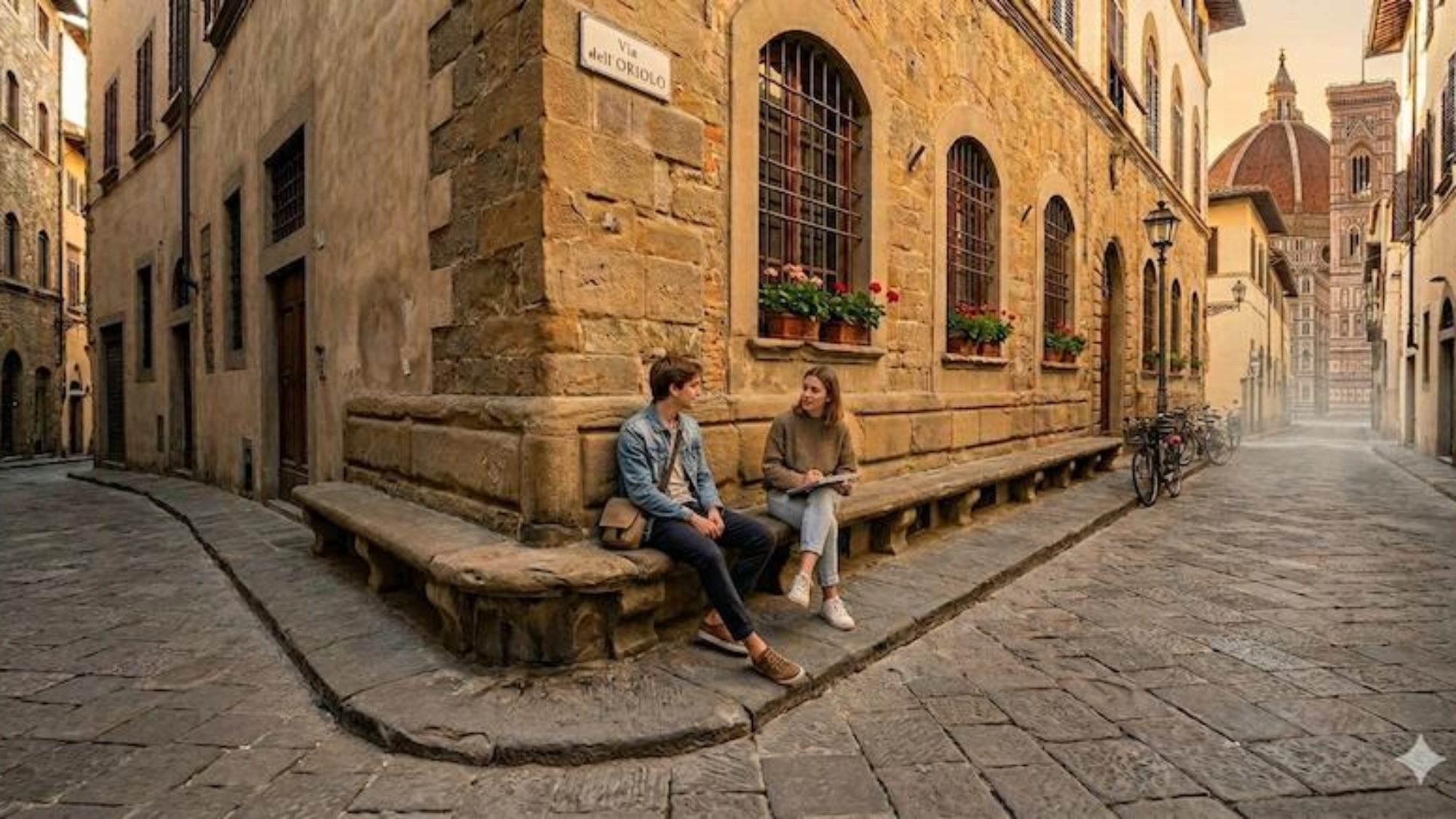
Walking through Florence, visitors often notice stone benches built directly into walls, corners, and building façades. At first glance they may seem like simple decorative elements, but these details reveal an important part of the city’s social and urban history.
Many travelers overlook them completely while exploring the historic center. Yet through Florence tours, visitors often discover how these small architectural details once played a central role in everyday Florentine life.
Florence Was Designed Around Public Life
Unlike modern cities built around vehicles and large roads, Florence developed as a city meant for walking and social interaction.
Its streets were designed to encourage:
- conversation and gathering
- commerce and exchange
- everyday community life
Stone benches and carefully designed street corners became natural meeting points within the urban landscape.
Stone Benches Were Part of Daily Social Life
For centuries, these benches were used by residents for rest, conversation, and observation of daily activity.
People would sit to:
- talk with neighbors
- discuss business
- escape the summer heat
- observe movement through the streets
The city itself functioned almost like a shared living room.
Why Benches Were Built Directly Into Buildings
Many benches were integrated into palaces and stone façades rather than added separately.
This served several purposes:
- durability
- efficient use of limited space
- creating shaded resting areas
In some cases, wealthy families installed benches outside their residences as a subtle display of hospitality and status.
Street Corners Had Practical and Social Functions
Street corners in Florence were carefully shaped by centuries of pedestrian movement.
Rounded corners and wider openings helped:
- improve movement through narrow streets
- create gathering spaces
- encourage commercial interaction
These corners became places where city life naturally concentrated.
Stone Helped Keep Public Spaces Cooler
Florence can become very warm during spring and summer afternoons. Stone surfaces helped regulate temperature and remained cooler than exposed open areas.
This made benches and shaded corners especially important before modern cooling systems existed.
Small Urban Details That Reveal Florence’s Identity
These architectural elements may seem minor, but together they reveal how Florence functioned historically.
They show that the city was built around:
- human interaction
- walkability
- public life
- social connection
Florence was not designed only to look beautiful. It was designed to be lived in.
Why Most Visitors Never Notice Them
Tourists often focus on major landmarks such as the Florence Cathedral or the Ponte Vecchio.
Because of this, smaller details like benches, corners, and stone seating areas are easy to overlook. Yet they often reveal more about daily life than monumental architecture alone.
Final Thoughts
Florence’s stone benches and street corners are not random decorative details. They are traces of a city built around people, conversation, and everyday interaction.
By paying attention to these quieter elements, visitors can begin to understand Florence not just as an open-air museum, but as a living urban space shaped by centuries of social life.