dante-statue-florence

Florence Itinerary 2 Days: What to See and How to Plan It

Spending two days in Florence is enough to experience its most important landmarks, Renaissance art, and authentic atmosphere. The city is compact, but without a plan it is easy to waste time or miss key attractions.

For this reason, many travelers choose Florence tours to explore the city efficiently while gaining deeper insight into its history and masterpieces.

Day 1 in Florence: Iconic Landmarks and Renaissance Art

Morning: Visit the Duomo Complex Early

Start your itinerary at the Florence Cathedral, the most famous landmark in the city. Arriving early is essential to avoid long lines.

Take time to explore:

  • the cathedral exterior
  • the Baptistery
  • Giotto’s Bell Tower

If possible, book in advance to climb the dome and enjoy panoramic views.

Late Morning: Piazza della Signoria and Palazzo Vecchio

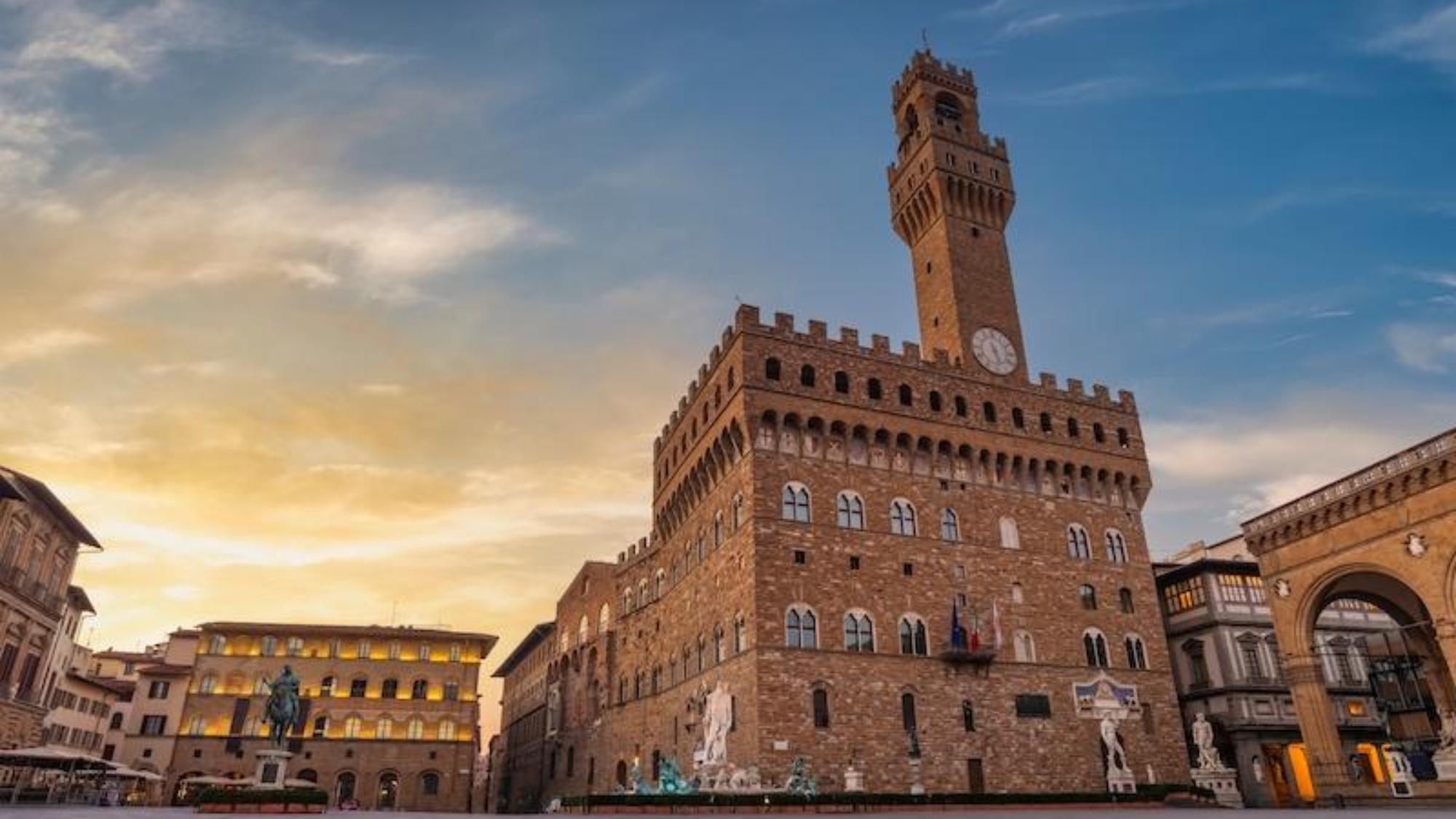
Walk toward Piazza della Signoria, one of Florence’s most important squares. Here you will find the Palazzo Vecchio, a symbol of the city’s political history.

This area is perfect for understanding how Florence developed during the Renaissance.

Afternoon: Uffizi Gallery

Visit the Uffizi Gallery, one of the most important museums in the world.

Booking tickets in advance is strongly recommended to avoid waiting in line. Focus on key masterpieces instead of trying to see everything.

Evening: Ponte Vecchio and Oltrarno

End your day at the Ponte Vecchio, especially at sunset.

Then explore the Oltrarno district for dinner, where you can find more authentic restaurants and fewer tourist crowds.

Day 2 in Florence: Culture, Views and Hidden Corners

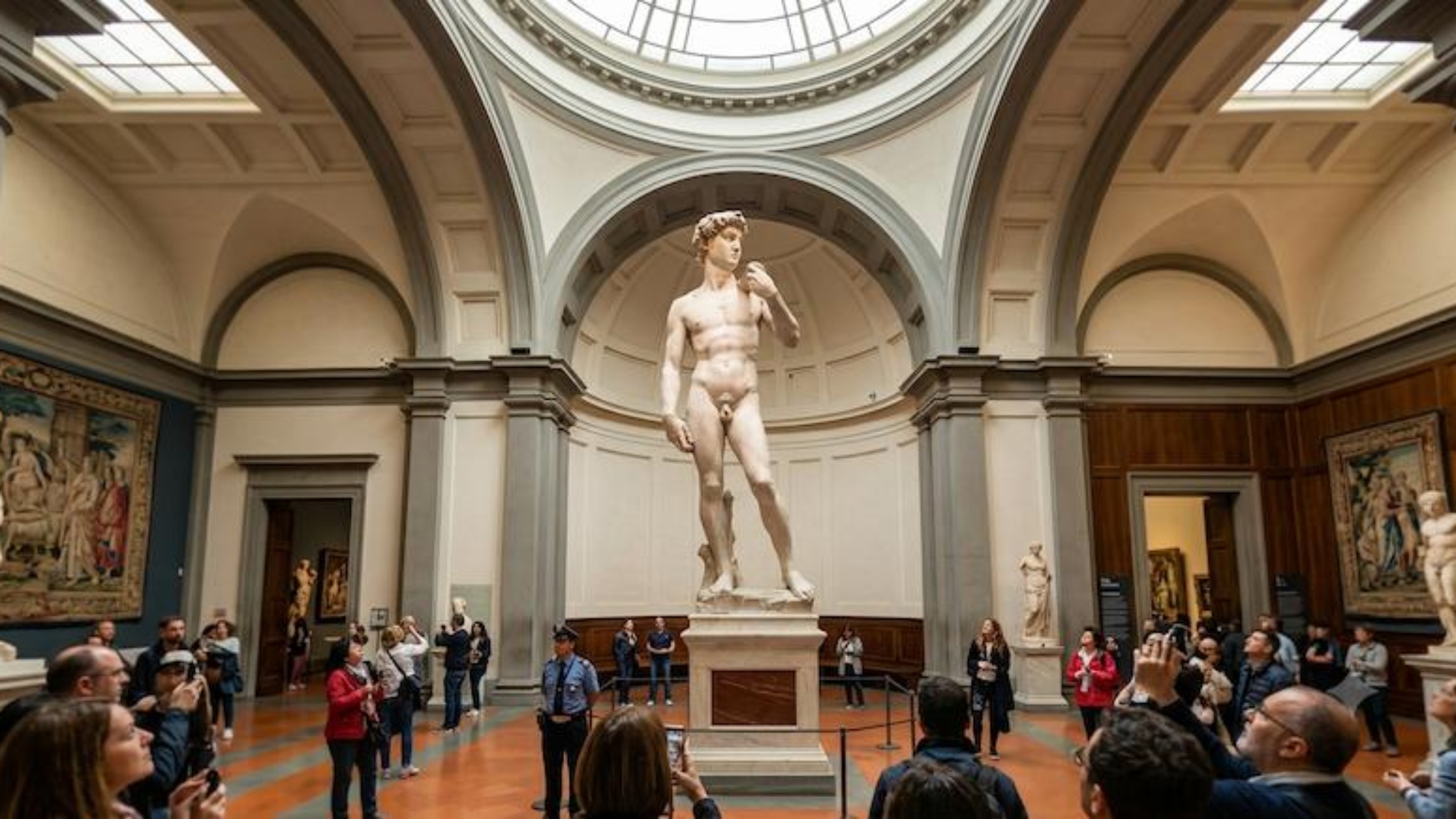
Morning: Accademia Gallery and Michelangelo’s David

Start your second day at the Accademia Gallery to see Michelangelo’s David.

Arriving early or booking a timed ticket helps you avoid the busiest hours.

Late Morning: San Lorenzo and Local Markets

Explore the San Lorenzo area, where you can experience a more local side of Florence. Markets and small shops offer a break from museums.

Afternoon: Santa Croce and Historic Streets

Visit the Basilica of Santa Croce, one of the most important churches in Florence.

Then take time to walk through nearby streets and discover hidden corners away from the main crowds.

Late Afternoon: Piazzale Michelangelo

Head to Piazzale Michelangelo for one of the best views in the city. This is one of the most memorable experiences in Florence, especially in the late afternoon.

How to Plan Your 2 Days in Florence

To make the most of your trip:

  • book major attractions in advance
  • visit popular sites early in the day
  • walk between locations to save time
  • avoid trying to see everything

A structured plan helps you enjoy Florence without stress.

Final Thoughts

Two days in Florence are enough to see the highlights while still enjoying the city’s atmosphere. With the right planning, you can balance art, history, and local experiences.

A well-organized itinerary allows you to save time, avoid crowds, and experience Florence more deeply.

colosseum-forum-palatinehill-tour

The Colosseum Beyond Gladiators: What Most Visitors Don’t Know

The Colosseum is one of the most famous monuments in the world, often associated with gladiator battles and dramatic spectacles. While these events are part of its history, they represent only a small portion of what this structure truly was.

For first-time visitors, understanding the Colosseum beyond its surface can completely change the experience. This is why many travelers explore it through Rome guided tours, where the hidden functions, stories, and engineering details become much clearer.

The Colosseum Was More Than an Arena

Most people imagine the Colosseum as a place for combat, but it was actually a multifunctional entertainment complex.

In addition to gladiator fights, it hosted:

  • animal hunts known as venationes
  • public executions
  • staged mythological performances
  • large-scale spectacles designed to impress the population

It was a place where entertainment, politics, and power were closely connected.

A Tool of Political Control

The Colosseum was not built only for entertainment. It was also a way for emperors to gain popularity and maintain control over the population.

By offering free events, leaders could:

  • distract citizens from political issues
  • reinforce their image as generous rulers
  • maintain social stability

This concept is often summarized as “bread and games,” a strategy that shaped Roman society.

The Underground World Few Visitors Imagine

Beneath the arena floor lies the hypogeum, a complex system of corridors, cages, and mechanical devices.

This hidden area allowed organizers to:

  • move animals and fighters unseen
  • create surprise entrances during shows
  • manage complex stage effects

The Colosseum functioned almost like a theatrical machine, carefully designed to impress and shock the audience.

Not All Seats Were Equal

The seating arrangement reflected Roman social hierarchy. Where you sat depended on your status in society.

  • the emperor had the best view
  • senators sat close to the arena
  • ordinary citizens sat higher up
  • women and lower classes were placed at the top

The Colosseum was not just a place of entertainment, but a mirror of Roman social structure.

The Colosseum Could Be Covered

Many visitors are surprised to learn that the Colosseum had a massive retractable awning called the velarium.

This system:

  • provided shade for spectators
  • was operated by trained sailors
  • required complex coordination

It shows how advanced Roman engineering was, even in comfort and crowd management.

A Monument That Changed Purpose Over Time

After the fall of the Roman Empire, the Colosseum was no longer used for entertainment. Over the centuries, it served many different purposes:

  • a fortress
  • a quarry for building materials
  • a religious site

Its meaning evolved from a symbol of power to a historical and cultural landmark.

Details Most Visitors Never Notice

Even when walking through the Colosseum, many details go unnoticed:

  • the numbering system used to manage crowds
  • the entrances designed for efficient movement
  • the architectural techniques that allowed rapid construction

These elements reveal how the Colosseum was designed for organization as much as spectacle.

Why Understanding the Colosseum Changes Your Visit

Seeing the Colosseum without context can feel impressive but incomplete. Once you understand its deeper functions, it becomes much more than a ruin.

You begin to see it as:

  • a political tool
  • an engineering masterpiece
  • a reflection of Roman society

Final Thoughts

The Colosseum is often reduced to the image of gladiators fighting in the arena, but its true story is far more complex. It was a place of power, control, innovation, and spectacle all at once.

By looking beyond the obvious, you can experience the Colosseum in a completely different way and understand why it remains one of the most fascinating monuments in the world.

arc-de-triomphe-paris

The Arc de Triomphe: Symbols and Stories Most Visitors Miss

Standing at the top of the Champs-Élysées, the Arc de Triomphe is one of the most recognizable landmarks in Paris. Most visitors admire its size, climb to the top for the view, and move on.

However, few realize that this monument is filled with symbols, hidden meanings, and historical details that tell the story of France’s identity, power, and memory.

To truly understand its significance, many travelers explore it through Paris tours, where guides reveal the deeper stories behind what at first seems like just a triumphal arch.

A Monument Built to Celebrate Power

The Arc de Triomphe was commissioned by Napoleon after his victory at Austerlitz. It was designed to celebrate military success and honor the French army.

But beyond its grandeur, the monument was also a political statement, meant to reflect strength, unity, and national pride.

Even today, it stands not just as a historical structure, but as a symbol of France itself.

The Sculptures Tell Stories of War and Identity

One of the most overlooked elements of the Arc de Triomphe is its detailed sculptural decoration.

The most famous is La Marseillaise, a dramatic relief showing soldiers marching forward, led by a winged figure representing Liberty.

This sculpture is not just decorative. It represents:

  • the spirit of revolution
  • the idea of national unity
  • the emotional intensity of war

Looking closely, each figure tells part of a larger story.

The Names Carved Into the Stone

Engraved on the inner and outer surfaces of the monument are the names of hundreds of generals and battles.

These inscriptions turn the Arc into a stone archive of French military history.

Visitors often walk past them without noticing, but they are one of the most meaningful elements of the structure.

The Tomb of the Unknown Soldier

Beneath the arch lies the Tomb of the Unknown Soldier, added after World War I. It honors soldiers who died without being identified.

An eternal flame burns here and is rekindled every evening in a solemn ceremony.

This transforms the monument from a symbol of victory into a place of remembrance and reflection.

Why the Location Matters

The Arc de Triomphe is located at the center of a massive star-shaped intersection, where twelve avenues meet.

This layout was not accidental. It was designed to:

  • emphasize the monument’s importance
  • create powerful visual perspectives
  • connect different parts of the city

From the top, visitors can see how Paris was shaped to highlight its most important landmarks.

Details Most Visitors Never Notice

Even attentive visitors often miss smaller details such as:

  • subtle differences between the sculpted figures
  • symbolic gestures representing victory or sacrifice
  • decorative elements inspired by ancient Rome

These details reveal how the monument blends classical inspiration with modern political meaning.

A Monument That Changed Meaning Over Time

Originally built to celebrate military triumph, the Arc de Triomphe has taken on new meanings over time.

Today it represents:

  • national memory
  • collective identity
  • respect for those who served

It is no longer just about victory, but also about reflection and history.

Final Thoughts

The Arc de Triomphe is much more than a monumental arch. It is a layered symbol filled with stories that most visitors never fully discover.

By looking beyond its surface, you can see how every sculpture, inscription, and design choice contributes to a deeper narrative about France, its history, and its identity.

Next time you stand beneath it, take a moment to look closer. The real story is in the details.

punta-della-dogana-venice

Why Booking a Venice Guided Tour Improves Your Experience

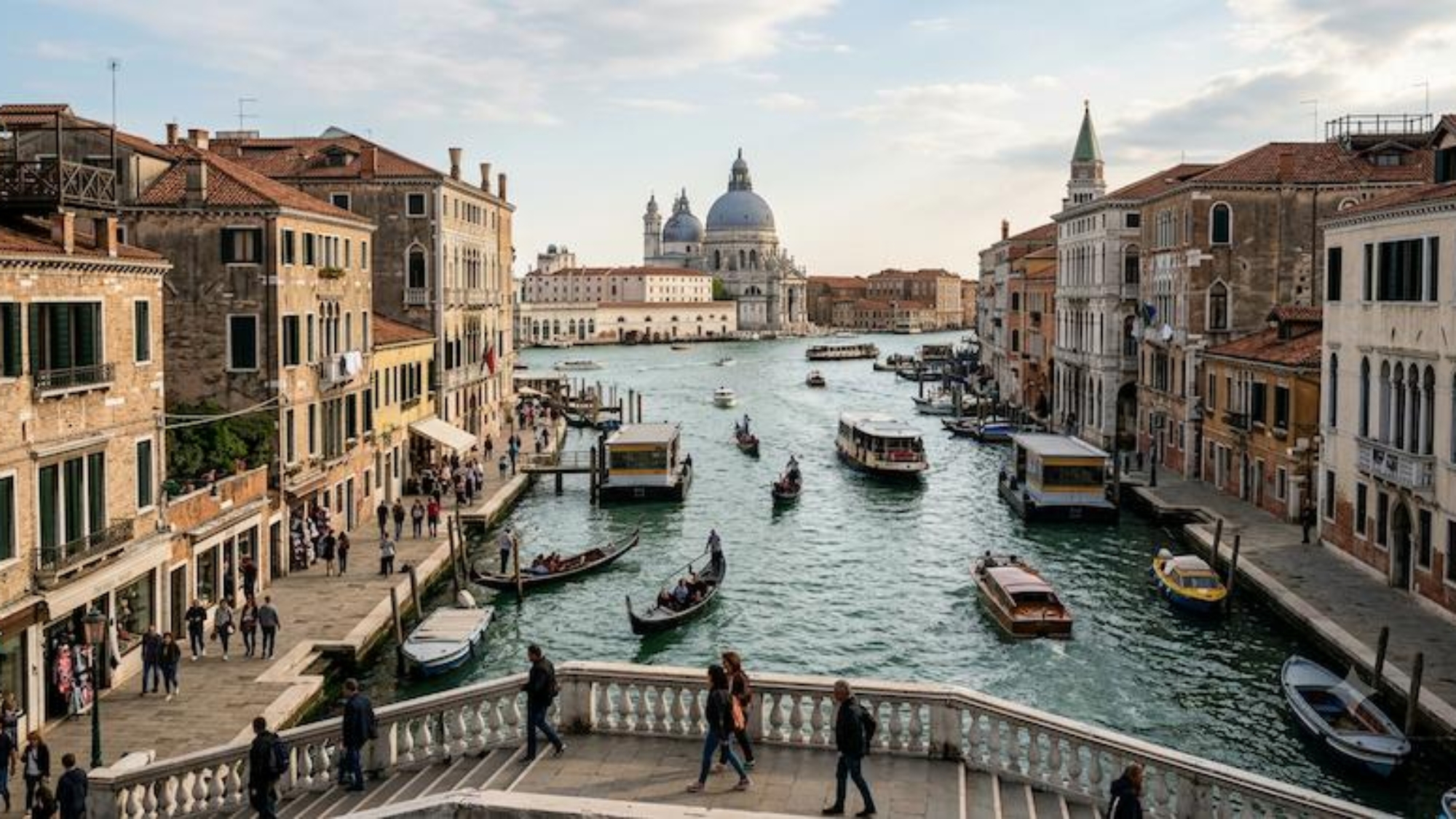
Venice is one of the most unique cities in the world, but its layout can be confusing for first-time visitors. Narrow streets, hidden passages, and a maze of canals make it easy to get lost or miss important details.

For this reason, many travelers choose Venice tours to better understand the city, discover hidden areas, and experience Venice in a more structured and meaningful way.

Venice Is Difficult to Navigate Without Context

Unlike most cities, Venice does not follow a simple street grid. Once you leave the main landmarks, navigation becomes less intuitive.

A guided tour helps you:

  • understand the structure of the city

  • move efficiently between areas

  • avoid unnecessary confusion

This saves time and reduces stress during your visit.

Discover Hidden Places Most Tourists Never See

Many of Venice’s most fascinating spots are not included in standard itineraries. These include quiet squares, hidden courtyards, and local neighborhoods.

With a guide, you can:

  • explore less crowded areas

  • discover authentic parts of the city

  • experience Venice beyond its most famous landmarks

This adds depth to your trip.

Learn the Stories Behind Venice

Venice is full of history, symbols, and traditions that are not immediately visible.

A guide can explain:

  • the meaning behind architectural details

  • the history of the Venetian Republic

  • how trade shaped the city’s development

This turns a simple walk into a rich cultural experience.

Save Time and Avoid Common Mistakes

First-time visitors often lose time trying to plan routes or understand how to move between attractions.

A guided tour helps you:

  • follow a well-organized itinerary

  • avoid overcrowded areas at peak times

  • focus on the most important sites

This is especially useful if you have limited time in Venice.

A More Engaging and Interactive Experience

Guided tours allow you to ask questions and interact with a local expert. This makes the experience more dynamic and personalized.

Instead of passively observing, you actively learn and engage with the city.

Ideal for First-Time Visitors

If it is your first time in Venice, a guided tour provides a strong introduction. It helps you understand the city quickly and gives you confidence to explore independently afterward.

It creates a solid foundation for the rest of your trip.

Final Thoughts

Venice is a city that reveals its beauty gradually. While exploring on your own can be enjoyable, a guided tour allows you to understand, navigate, and experience the city more deeply.

For first-time visitors, this often makes the difference between simply visiting Venice and truly discovering it.

san-miniato-florence

Top Day Trips from Florence You Shouldn’t Miss

Florence is one of the most beautiful cities in Italy, but its location in the heart of Tuscany makes it the perfect starting point for exploring nearby destinations. Within a short distance you can visit medieval towns, vineyards, historic cities and scenic countryside landscapes.

Many travelers choose organized Florence tours for these excursions because they make it easier to reach smaller towns and rural areas without worrying about transportation or planning logistics.

If you are visiting Florence for the first time, these destinations are among the best day trips you can take from the city.

Day Trip from Florence to Pisa

One of the most famous destinations near Florence is the Leaning Tower of Pisa.

Pisa is located about one hour from Florence and is known worldwide for its iconic leaning bell tower located in Piazza dei Miracoli. The square also includes a cathedral and a historic baptistery, making it one of the most impressive architectural complexes in Italy.

A visit to Pisa is ideal for travelers who want a short and easy day trip with a globally recognized landmark.

Day Trip from Florence to Siena

The medieval city of Siena is considered one of the most beautiful cities in Tuscany.

Its main square, Piazza del Campo, is famous for the historic Palio horse race that takes place twice a year. Siena is also home to an extraordinary Gothic cathedral and a historic center filled with narrow streets, artisan shops and traditional restaurants.

For visitors interested in medieval history and architecture, Siena is one of the most rewarding day trips from Florence.

Visiting San Gimignano from Florence

The hilltop town of San Gimignano is often called the “Medieval Manhattan” because of its skyline filled with ancient towers.

Walking through the town feels like stepping back in time. Visitors can explore small piazzas, artisan shops and scenic viewpoints overlooking the Tuscan countryside.

San Gimignano is a great destination for travelers who want to experience a classic Tuscan village atmosphere.

Chianti Wine Region Day Trip from Florence

The Chianti region is famous for its vineyards, olive groves and rolling hills.

A day trip here offers a completely different experience from Florence’s urban environment. Visitors can enjoy wine tastings, scenic countryside drives and visits to small villages surrounded by vineyards.

For many travelers, exploring Chianti is one of the most memorable experiences in Tuscany.

Day Trip from Florence to Lucca

The charming city of Lucca is known for its well preserved Renaissance walls.

Visitors can walk or cycle along these walls while enjoying beautiful views of the historic center. Inside the city, quiet streets, Romanesque churches and lively piazzas create a relaxed and welcoming atmosphere.

Lucca is often considered one of the most pleasant and less crowded day trips from Florence.

How to Choose the Best Day Trip from Florence

Choosing the right destination depends on the type of experience you want.

Historic cities such as Siena and Lucca are ideal for culture and architecture. San Gimignano offers a medieval atmosphere, while Chianti is perfect for countryside landscapes and wine experiences.

Many travelers combine two destinations in a single day, especially when visiting Tuscany for the first time.

Final Thoughts

Florence is an extraordinary destination on its own, but exploring the surrounding region allows visitors to experience the full beauty of Tuscany.

From medieval cities to vineyard landscapes, the best day trips from Florence offer unforgettable experiences that complement the art and history of the city itself.

Even one excursion outside Florence can become one of the highlights of your trip.

ghost-tour-rome-benefit2

Is a Guided Tour in Rome Really Worth It?

Rome is one of the most historically rich cities in the world. Ancient ruins, Renaissance masterpieces, and Baroque churches appear almost everywhere you walk. For first-time visitors, however, the sheer amount of history can feel overwhelming. Seeing the monuments is easy, but truly understanding them is another matter.

For this reason, many travelers discover that joining one of the Rome tours available in the city is one of the best ways to experience its history, culture, and hidden stories in a meaningful way.

Rome Is a City of Layers

Unlike many destinations, Rome was built on top of itself for more than two thousand years. A church might stand on the ruins of a Roman temple, and beneath that could lie even older foundations.

Without context, it is easy to miss these connections. A knowledgeable guide can explain how different historical periods overlap and how Rome evolved through centuries of political and cultural change.

Stories Bring Monuments to Life

When visiting landmarks such as the Colosseum or the Roman Forum, the stones themselves cannot tell their stories.

A guide can explain:

  • how gladiator games were organized

  • how Roman politics worked in the Forum

  • why certain monuments were built in specific locations

These narratives transform ruins into vivid historical scenes.

Saving Time in a City Full of Attractions

Rome has countless attractions, and planning an efficient itinerary can be challenging. Guided tours often include structured routes that help visitors see important landmarks without wasting time navigating confusing streets or long ticket lines.

Many tours also include priority access to major attractions, which can make a big difference during peak travel seasons.

Discovering Hidden Details

Experienced guides point out details most visitors overlook. These might include:

  • small symbols carved into buildings

  • hidden inscriptions

  • historical anecdotes connected to specific locations

These discoveries add depth to the experience and help travelers see Rome in a new way.

Asking Questions Along the Way

Another advantage of guided tours is the opportunity to ask questions. Visitors can learn about local traditions, Roman culture, or practical travel advice while exploring the city.

This interaction makes the experience more engaging and personal.

Ideal for First-Time Visitors

For travelers visiting Rome for the first time, guided tours provide an excellent introduction to the city’s complex history. After gaining a deeper understanding of the main landmarks, it becomes much easier to explore independently.

A guided tour acts as a foundation that helps visitors appreciate the rest of their trip more fully.

Final Thoughts

Rome is not just a collection of monuments. It is a city shaped by centuries of stories, ambitions, and transformations. While independent exploration can be rewarding, a guided tour often reveals the deeper meaning behind what you see.

For first-time visitors, this insight can turn a simple sightseeing trip into a richer and far more memorable experience.

paris-tours

Hidden Gems in Paris Near Major Attractions

Paris is filled with world-famous landmarks, yet just steps away from these iconic sites are quieter corners that many visitors miss. Exploring these hidden gems allows you to enjoy Paris without the crowds while staying close to the city’s most celebrated monuments.

For travelers who want to combine must-see attractions with authentic local discoveries, our Paris tours often reveal lesser-known streets and courtyards hidden in plain sight.

Near the Eiffel Tower: Rue de l’Université

Just a short walk from the Eiffel Tower, Rue de l’Université offers one of the most picturesque yet calmer viewpoints of the tower. Early mornings here are peaceful and perfect for photography.

Near the Louvre: Cour Carrée

While most visitors head straight into the Louvre Museum, few explore the Cour Carrée. This elegant inner courtyard feels surprisingly quiet compared to the main entrance area.

Near Notre-Dame: Square René Viviani

Steps away from Notre-Dame Cathedral, this small park offers benches, greenery, and one of the oldest trees in Paris. It provides a peaceful escape from the crowds on Île de la Cité.

Near Montmartre: Vineyard of Clos Montmartre

While tourists climb to the Sacré-Cœur, many overlook the small vineyard hidden nearby. The Clos Montmartre reminds visitors that Paris once had a thriving wine culture.

Near the Champs-Élysées: Passage Brady

A short distance from the grand avenue lies Passage Brady, a covered arcade filled with vibrant restaurants and shops. It feels like stepping into a completely different Paris.

Why Explore Hidden Gems

Hidden gems offer:

  • Fewer crowds

  • Better photo opportunities

  • More authentic atmosphere

  • A chance to slow down

They allow first-time visitors to experience Paris beyond its most photographed spots.

Final Thoughts

Paris rewards curiosity. Just by turning a corner or walking one street further, you can discover a quieter, more intimate version of the city.

Balancing major landmarks with hidden gems ensures your first trip to Paris feels both iconic and personal.

venice tours

How to Avoid Tourist Traps in Venice

Venice is one of the most magical cities in the world but it’s also one of the most visited. For first-time travelers, it can be difficult to distinguish between authentic Venetian experiences and overpriced tourist traps. With a little awareness and planning, you can enjoy the city’s beauty without falling into common pitfalls.

To explore Venice with context and local insight, our guided Venice tours are designed to help visitors navigate the city intelligently avoiding crowded clichés and discovering places that still feel genuine.

1. Avoid Restaurants with “Tourist Menu” Signs

If you see menus in five languages with large photos of pizza and pasta displayed outside, it’s usually a red flag. Authentic Venetian restaurants rarely advertise aggressively.

Instead:

  • Look for shorter menus focused on seasonal dishes

  • Check if locals are dining inside

  • Avoid places directly facing major landmarks

Walking just two or three streets away from busy squares often makes a significant difference in both quality and price.

2. Be Smart About Gondola Rides

A gondola ride is iconic but pricing confusion can feel like a trap. Official gondola rates are fixed per boat, not per person.

To avoid misunderstandings:

  • Confirm the official rate before boarding

  • Understand that the price covers up to five passengers

  • Avoid gondoliers who approach you aggressively

Alternatively, consider a short traghetto crossing for a fraction of the price if you simply want the experience of riding in a traditional boat.

3. Don’t Limit Yourself to St. Mark’s Square

The St. Mark’s Square is breathtaking but it’s also the most crowded and expensive area in the city. Sitting at a café here can mean paying significantly more, especially if live music is playing.

Instead:

  • Visit early morning or late evening

  • Explore surrounding sestieri like Cannaregio or Dorsoduro

  • Wander without a strict route

Venice reveals its charm in quieter corners.

4. Watch Out for Cheap Souvenir Shops

Mass-produced masks and “Murano glass” items are widely sold near tourist hubs. Many are imported replicas rather than authentic Venetian craftsmanship.

To avoid disappointment:

  • Look for certified artisan workshops

  • Visit smaller ateliers away from major pedestrian flows

  • Ask about production origin

Authentic craftsmanship still exists but it requires a bit more effort to find.

5. Book Major Attractions in Advance

Long lines can waste precious time. For first-time visitors, booking tickets in advance for:

  • Doge’s Palace

  • St. Mark’s Basilica

helps avoid unnecessary waiting and reduces stress during your visit.

6. Understand the Vaporetto System

Public transport in Venice operates differently than in most cities. Buying single tickets repeatedly can become expensive.

Instead:

  • Consider a multi-day transport pass

  • Validate tickets correctly

  • Plan routes in advance

Knowing how the system works prevents both confusion and unexpected costs.

7. Avoid Peak Cruise Arrival Hours

When cruise ships arrive, certain areas become suddenly crowded. If possible:

  • Visit major attractions early

  • Explore residential neighborhoods mid-day

  • Schedule popular sites strategically

Timing can completely change your experience.

8. Don’t Rush the City

One of the biggest mistakes is trying to “do Venice” in a checklist manner. The city is compact but layered.

Slow walking, observing architectural details, and stepping into small churches often provide more memorable experiences than chasing highlights.

9. Be Mindful of Flood Season

Acqua alta (high water) can affect certain areas during autumn and winter. It’s not a trap but being unprepared can disrupt plans.

Check forecasts and wear appropriate footwear if necessary.

10. Seek Authentic Experiences

Venice is not just a postcard backdrop it’s a living city. Authentic experiences include:

  • Visiting local markets

  • Exploring lesser-known islands

  • Joining small-group guided walks

  • Learning about Venetian history beyond clichés

These experiences create lasting memories far beyond surface impressions.

Final Thoughts

Avoiding tourist traps in Venice doesn’t mean avoiding popular places, it means approaching them with awareness. By planning strategically, walking a little farther, and choosing quality over convenience, first-time visitors can experience Venice in a way that feels authentic rather than staged.

With the right mindset, Venice becomes less about crowds and more about quiet discoveries, exactly the way the city was meant to be explored.

brunelleschi-dome-florence

Brunelleschi’s Dome: The Mystery Behind Its Impossible Construction

Rising above Florence’s skyline, the dome of the Florence Cathedral remains one of the greatest architectural achievements ever attempted. When construction began in the early 15th century, experts believed it could not be built. There were no cranes capable of lifting such weight, no wooden beams long enough to support scaffolding, and no clear precedent for covering a space so vast.

To truly appreciate this masterpiece, our Florence tours often reveal how Brunelleschi combined mathematics, intuition, secrecy, and bold experimentation to solve a problem that had remained unsolved for decades.

The Problem No One Could Solve

The cathedral had been under construction for more than a century, yet the central crossing remained open. The challenge was immense:

  • The span was over 45 meters wide

  • Traditional wooden scaffolding would have required vast forests of timber

  • Gothic flying buttresses, common elsewhere in Europe, were rejected in Florence

The city needed a dome—but no one knew how to build it.

Brunelleschi’s Radical Proposal

Filippo Brunelleschi, a goldsmith with no formal architectural training, proposed an audacious solution: he would build the dome without external support structures.

His plan was so unconventional that he refused to fully explain it to the committee overseeing the project. He feared his ideas would be stolen. Instead, he offered demonstrations—most famously the egg challenge, proving that innovation often lies in simplicity once the solution is revealed.

A Dome Within a Dome

Brunelleschi’s key innovation was designing two shells instead of one:

  • An inner dome for structural strength

  • An outer dome for protection and visual grandeur

Between them, a network of ribs and horizontal chains acted like hidden reinforcements. This double-shell system reduced weight while maintaining stability.

It was revolutionary.

The Herringbone Brick Pattern

Perhaps the most mysterious element of the dome is its herringbone brick pattern. Instead of laying bricks in simple horizontal rows, Brunelleschi arranged them in a diagonal interlocking system.

This pattern:

  • Redirected weight downward

  • Prevented slippage during construction

  • Allowed the dome to support itself as it rose

It was a solution so advanced that even today engineers continue to study it.

Machines That Didn’t Exist Yet

To build the dome, Brunelleschi invented machines specifically for the task. These included:

  • Hoisting devices powered by oxen

  • Reversible gear systems

  • Complex pulley mechanisms

These machines were as groundbreaking as the dome itself, marking a turning point in Renaissance engineering.

A Project Wrapped in Secrecy

Brunelleschi guarded his methods carefully. He documented little, leaving behind no detailed construction manual. This secrecy contributed to the dome’s mystique.

Even centuries later, scholars still debate exactly how some aspects of the structure were executed.

Why It Was Called Impossible

The dome defied conventional wisdom because:

  • No comparable structure had been built since antiquity

  • The technology did not seem sufficient

  • The financial risk was enormous

Yet against all expectations, the dome rose—brick by brick—without collapsing.

A Symbol of Florence’s Ambition

Beyond engineering, the dome represented something larger. It symbolized:

  • Florence’s independence

  • Human intellect overcoming limitation

  • The dawn of the Renaissance spirit

It was not just a roof—it was a statement.

Final Thoughts

Brunelleschi’s dome remains a monument to bold thinking. Built without modern tools, without complete precedent, and without revealing all its secrets, it transformed architecture forever.

Standing beneath it, visitors are not just looking at a cathedral ceiling—they are witnessing the moment when human imagination proved stronger than doubt.

Interior view of the Pantheon dome in Rome with natural light streaming through the central oculus.

Why the Pantheon Has a Hole in the Roof

One of the most astonishing features of the Pantheon is also the most puzzling: a perfect circular opening at the top of its massive dome. Rain falls through it, sunlight pours in, and yet for nearly two thousand years, the hole has never been closed. Far from being a flaw, this opening—known as the oculus—is the key to understanding the Pantheon’s purpose.

To fully grasp the meaning behind this architectural choice, our Rome tours often explore how ancient monuments combined engineering, religion, and symbolism to shape how Romans experienced the world.

The Oculus Was Intentional, Not a Missing Roof

The Pantheon was completed around the 2nd century AD, and the oculus has always been part of its design. Measuring nearly 9 meters (30 feet) in diameter, it was never meant to be covered.

This opening serves several crucial purposes at once:

  • It is the only natural light source inside the building

  • It reduces the weight of the massive concrete dome

  • It creates a direct connection between the interior and the sky

The Pantheon was designed as a perfect geometric space, and the oculus completes that harmony.

A Temple Meant for the Gods, Not for Shelter

The Pantheon was dedicated to all the gods of ancient Rome. Its name comes from Greek words meaning “all” (pan) and “divine” (theos).

The open roof symbolized:

  • The presence of the heavens

  • The constant watch of the gods over Rome

  • The idea that divine power came from above

Standing inside the Pantheon, Romans were meant to feel inside the universe itself, not protected from it.

Light as a Sacred Element

Throughout the day, sunlight enters through the oculus and moves slowly across the interior walls like a giant sundial. This was no accident.

On certain dates, such as the spring equinox, the light aligns in particularly striking ways, illuminating specific architectural elements. The movement of light turned the Pantheon into a cosmic instrument, marking time through the sun rather than through clocks.

Light was not decoration—it was meaning.

Why Rain Was Never a Problem

Yes, rain falls inside the Pantheon. Ancient Romans anticipated this.

The marble floor is subtly sloped, and hidden drainage holes allow water to flow away efficiently. This practical solution proves that the oculus was not symbolic alone—it was fully functional.

Rather than keeping nature out, the Pantheon was designed to accept it calmly.

Engineering Genius Behind the Open Dome

The Pantheon’s dome is still the largest unreinforced concrete dome in the world. The oculus plays a structural role by:

  • Removing stress from the center of the dome

  • Preventing collapse under its own weight

  • Allowing thinner construction at the top

Without the opening, the dome may not have survived centuries of time, earthquakes, and weather.

Why It Was Never Closed Later

Over the centuries, many ancient buildings were altered, yet the oculus remained untouched. Why?

Because later generations understood that closing it would:

  • Destroy the building’s balance

  • Alter its meaning

  • Compromise its structure

When the Pantheon became a Christian church, the open sky was reinterpreted as God’s presence, not a pagan relic. Its meaning evolved, but its purpose remained intact.

A Monument That Accepts the Sky

Unlike most architecture, which separates humans from nature, the Pantheon embraces the elements. Wind, rain, light, and silence all become part of the experience.

This makes it feel timeless, alive, and radically modern—even today.

Final Thoughts

The hole in the Pantheon’s roof is not a mystery waiting to be fixed. It is the monument’s most important feature.

By leaving the sky open, the Romans created a space where architecture, religion, science, and philosophy meet. The Pantheon does not shut the world out—it invites it in. And that is precisely why it still feels so powerful after nearly two thousand years.