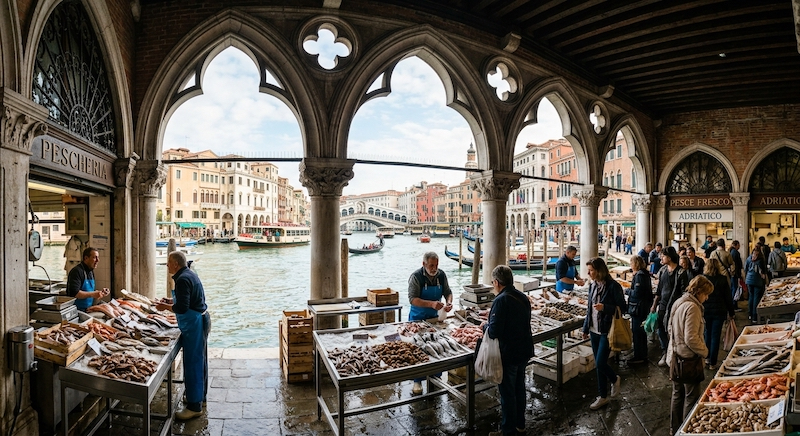
The Rialto Market has been Venice’s commercial heart for around a thousand years, and it still operates every morning beside the Grand Canal — a working fish and produce market where Venetians, not just tourists, do their shopping. It’s one of the few places in the city centre where you see everyday Venetian life rather than a version staged for visitors. Here’s its story, what to look for, and how to time a visit.
A Thousand Years of Trade
Long before Venice was a tourist destination, it was a trading empire — and the Rialto was where the trading happened.
The market grew up here, beside the Grand Canal, from around the 11th century, and this stretch of the San Polo district became the commercial and financial centre not just of Venice but of a Mediterranean trading network. Spices, silk, and goods from the East passed through Rialto; Europe’s first public bank district took shape nearby. When you stand in the market, you’re standing in what was, for centuries, one of the busiest marketplaces in the world.
The name “Rialto” comes from Rivoalto — “high bank” — the elevated, stable ground where the earliest settlers built, safe from the lagoon’s flooding. It’s some of the oldest inhabited land in Venice.
What the Market Is Today
The Rialto is not a museum of itself — it’s a living, working market, and that’s the whole appeal.
Touring it is as culturally interesting as it is food-related: it’s one of the best ways to see how Venetians actually supply themselves in a city with no roads and no cars. All the locals shop here, from restaurant owners stocking their kitchens to ordinary residents buying the day’s dinner.
It has two main parts:
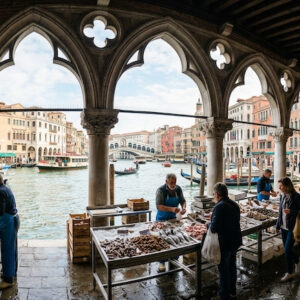
- The Pescheria (fish market) — the heart of it, housed under a neo-Gothic loggia right on the Grand Canal. The catch comes in fresh from the lagoon and the Adriatic, and the variety — much of it unfamiliar to visitors — is a sight in itself.
- The Erberia (produce market) — fruit and vegetables, much of it from the lagoon island of Sant’Erasmo, Venice’s own kitchen garden. Seasonal Venetian produce like castraure (baby artichokes) appears here first.
What to Look For
Even if you’re not buying, the market rewards a slow walk:
- The fish stalls at the Pescheria — the theatre of the market, and best early when the display is complete and the trade is busiest.
- The Grand Canal setting — the Pescheria opens directly onto the water, where the produce once arrived (and some still does) by boat.
- The columns of the loggia, carved with reliefs, and the small details that mark this as a place built for centuries of daily use.
- The surrounding bacari — the tiny wine bars around the market are among the oldest and most authentic in Venice, which brings us to the best reason to time your visit well.
Eat Like a Local Around the Market
The lanes around the Rialto hold some of Venice’s most historic bacari (wine bars) and the city’s best cicchetti — the small Venetian bar snacks eaten standing up with a glass of wine.
This is not a coincidence: the bars grew up to feed and water the market’s traders and porters. Near the market you’ll find Cantina Do Mori, founded in 1462 and considered the oldest bacaro in the city. Our guides to the best cicchetti bars in Venice and the historic osterias where only locals go both centre on this area — the market and its bars are really one experience.
The move: visit the market in the morning, then have an early cicchetti-and-wine lunch at a nearby bacaro. It’s how Venetians have done it for centuries.
When to Go: Timing Matters
This is the one thing to get right, because the market keeps market hours.
- Go in the morning. The market operates in the morning and winds down by early afternoon — arrive too late and the stalls are packing up.
- Earlier is better. The fish market is at its liveliest and most complete early; by lunchtime it’s thinning out.
- Check the closing days. The fish market is closed on Sundays and Mondays (Monday is the traditional closing day, as no fish is caught on Sunday). The produce market keeps broader hours, but for the full Rialto experience, avoid those two days.
In short: a weekday morning is the ideal window. A Monday afternoon is the worst — you’ll find it closed or closing.
Getting There
The market is in San Polo, on the opposite side of the Grand Canal from the San Marco side, right by the Rialto Bridge.
- On foot — well signposted from anywhere in the centre; follow the Per Rialto signs.
- By vaporetto — the Rialto Mercato stop puts you right at the market.
- Cross the Rialto Bridge — if you’re coming from the San Marco side, crossing the bridge and descending into the market on the far side is the natural approach.
The Rialto Bridge itself — the oldest and most famous of the four bridges over the Grand Canal — is worth the visit in its own right, and the two go together naturally.
Fitting It Into Your Visit
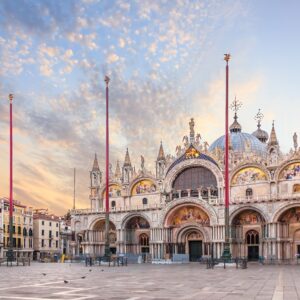
The Rialto Market pairs perfectly with a walk along the Grand Canal and a stop at St. Mark’s — it’s central, quick, and free. On a short visit, our one-day Venice itinerary folds the market into a morning walk between St. Mark’s and the Rialto Bridge.
If you’d like the market and the city’s highlights brought together with a guide, our Venice tours cover the historic centre with local guides who can add the context behind what you’re seeing.
FAQ
What are the Rialto Market opening times?
The market operates in the morning and winds down by early afternoon, so a morning visit is essential. The fish market (Pescheria) is closed on Sundays and Mondays; the produce market keeps somewhat broader hours.
Why is the Rialto Market closed on Mondays?
The fish market closes on Mondays because no fishing takes place on Sundays, so there’s no fresh catch to sell. It’s the traditional rhythm of the market, and it’s also closed Sundays.
Is the Rialto Market worth visiting?
Yes — it’s one of the few places in central Venice where you see genuine local life rather than a tourist-facing version. It’s free, quick, atmospheric, and set right on the Grand Canal, with the city’s best cicchetti bars around it.
How old is the Rialto Market?
Around a thousand years. The market grew up beside the Grand Canal from about the 11th century and became the commercial heart of the Venetian trading empire.
What can you buy at the Rialto Market?
Fresh fish and seafood at the Pescheria, and fruit and vegetables — much from the lagoon island of Sant’Erasmo — at the Erberia. Even if you’re not shopping, both are worth seeing.
Where is the Rialto Market?
In the San Polo district, beside the Grand Canal, right next to the Rialto Bridge. The Rialto Mercato vaporetto stop drops you at its edge.
What’s the best way to visit the Rialto Market?
A weekday morning, followed by cicchetti and a glass of wine at one of the historic bacari around it. Going with a guide who knows the area adds the history behind what you’re seeing.