Walking through Florence, it’s easy to be distracted by grand façades and famous names. Yet, carved into stone cornices, window frames, and corners of palaces lies a silent language of symbols that most visitors pass without ever noticing. These signs were not decorative—they were messages of power, protection, identity, and ambition.
To discover this hidden side of the city with expert insight, our Florence tours often reveal the meanings behind these overlooked details, transforming an ordinary walk into a journey through Florence’s symbolic past.
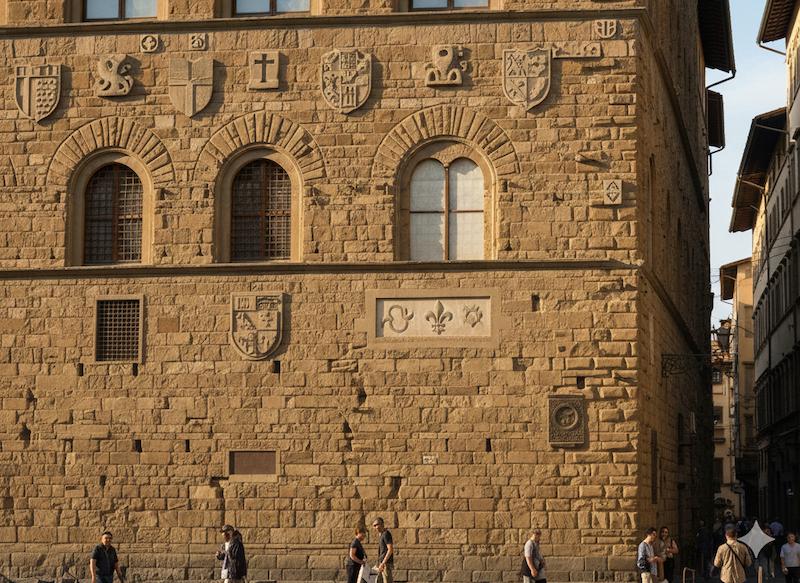
Coats of Arms: Stone Signatures of Power
Nearly every historic palace in Florence bears a stemma, a coat of arms identifying the family who owned the building. These were not merely family crests—they functioned as public declarations of status and alliances.
Lions, eagles, shields, and crowns communicated:
-
Political loyalty
-
Noble rank
-
Military achievements
-
Connections to powerful families or institutions
A missing or deliberately damaged coat of arms often tells a story of exile, disgrace, or political downfall.
Animals as Symbols of Virtue and Warning
Florentine palaces are populated by carved animals, each with a precise meaning understood by medieval citizens.
Common examples include:
-
Lions, symbols of strength, vigilance, and the city itself
-
Dogs, representing loyalty and protection
-
Snakes, linked to rebirth, power, or cunning
-
Eagles, associated with imperial authority and divine protection
These animals were chosen carefully, broadcasting the values a family wished to project.
The Eyes That Watch the Street
On closer inspection, many palaces display faces, masks, or disembodied eyes carved above doors and windows. These unsettling figures were meant to:
-
Ward off evil
-
Intimidate rivals
-
Remind passersby they were being observed
In a city obsessed with reputation, these symbols reinforced control without a single word.
Rings, Chains, and Knots: Silent Claims of Loyalty
Some Florentine palaces display carved rings, knots, or chains, symbols of unity, marriage alliances, or political bonds.
A chain might represent loyalty to a ruling family, while an endless knot symbolized eternity and unbreakable ties. These images often replaced written contracts, communicating alliances to anyone who could read stone.
Sacred Symbols on Secular Buildings
It may seem surprising to find religious symbols on private palaces, yet Florence blurred the line between sacred and secular life. Crosses, stars, and saintly emblems were placed on façades to:
-
Invoke divine protection
-
Legitimize wealth and power
-
Publicly demonstrate faith
In turbulent times, a sacred symbol could also serve as a spiritual shield against envy and misfortune.
Bricked-Up Windows and Their Meaning
Many palaces feature sealed or partially closed windows, often mistaken for renovations. In reality, these changes were sometimes symbolic or strategic:
-
Tax avoidance, as windows were taxed
-
Security measures
-
Visual statements of control over privacy
Even architectural absences tell stories in Florence.
Numbers and Geometry as Hidden Codes
Florentine builders often embedded numerology and geometric proportions into façades. Certain numbers were believed to bring harmony, stability, or divine favor. Symmetry was not just aesthetic—it reflected cosmic order and human ambition to mirror it.
To Renaissance Florentines, mathematics was a language of God.
Why These Symbols Still Matter
These hidden signs reveal Florence as it truly was:
-
Competitive
-
Deeply symbolic
-
Politically charged
-
Obsessed with legacy and memory
Every palace façade functioned as a billboard of identity, readable to anyone trained in the city’s visual language.
How to Start Noticing Them
To uncover these symbols:
-
Walk slowly and look above eye level
-
Focus on doorways and corners
-
Compare repeating motifs across neighborhoods
-
Notice what has been altered or removed
Once you start seeing them, Florence becomes a city that speaks without words.
Final Thoughts
Florence’s palaces are not silent monuments—they are coded messages in stone, left behind by families eager to assert power, protect their legacy, and communicate with the world.
By learning to read these symbols, visitors unlock a deeper understanding of Florence: a city where architecture was language, stone was memory, and every façade told a story waiting to be noticed.