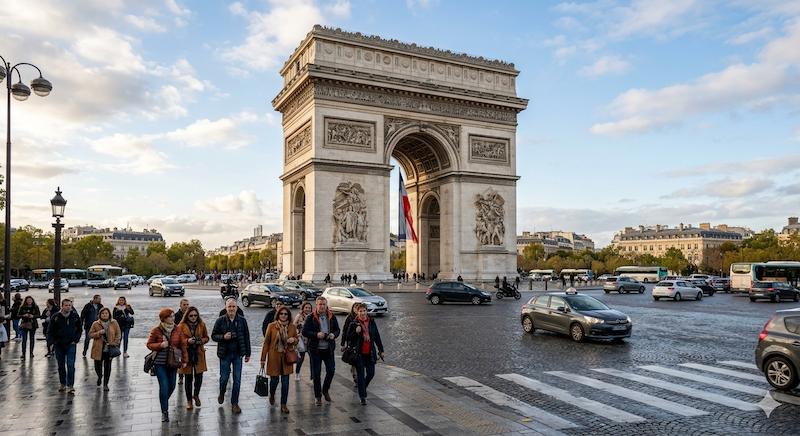
Standing at the top of the Champs-Élysées, the Arc de Triomphe is one of the most recognizable landmarks in Paris. Most visitors admire its size, climb to the top for the view, and move on.
However, few realize that this monument is filled with symbols, hidden meanings, and historical details that tell the story of France’s identity, power, and memory.
To truly understand its significance, many travelers explore it through Paris tours, where guides reveal the deeper stories behind what at first seems like just a triumphal arch.
A Monument Built to Celebrate Power
The Arc de Triomphe was commissioned by Napoleon after his victory at Austerlitz. It was designed to celebrate military success and honor the French army.
But beyond its grandeur, the monument was also a political statement, meant to reflect strength, unity, and national pride.
Even today, it stands not just as a historical structure, but as a symbol of France itself.
The Sculptures Tell Stories of War and Identity
One of the most overlooked elements of the Arc de Triomphe is its detailed sculptural decoration.
The most famous is La Marseillaise, a dramatic relief showing soldiers marching forward, led by a winged figure representing Liberty.
This sculpture is not just decorative. It represents:
- the spirit of revolution
- the idea of national unity
- the emotional intensity of war
Looking closely, each figure tells part of a larger story.
The Names Carved Into the Stone
Engraved on the inner and outer surfaces of the monument are the names of hundreds of generals and battles.
These inscriptions turn the Arc into a stone archive of French military history.
Visitors often walk past them without noticing, but they are one of the most meaningful elements of the structure.
The Tomb of the Unknown Soldier
Beneath the arch lies the Tomb of the Unknown Soldier, added after World War I. It honors soldiers who died without being identified.
An eternal flame burns here and is rekindled every evening in a solemn ceremony.
This transforms the monument from a symbol of victory into a place of remembrance and reflection.
Why the Location Matters
The Arc de Triomphe is located at the center of a massive star-shaped intersection, where twelve avenues meet.
This layout was not accidental. It was designed to:
- emphasize the monument’s importance
- create powerful visual perspectives
- connect different parts of the city
From the top, visitors can see how Paris was shaped to highlight its most important landmarks.
Details Most Visitors Never Notice
Even attentive visitors often miss smaller details such as:
- subtle differences between the sculpted figures
- symbolic gestures representing victory or sacrifice
- decorative elements inspired by ancient Rome
These details reveal how the monument blends classical inspiration with modern political meaning.
A Monument That Changed Meaning Over Time
Originally built to celebrate military triumph, the Arc de Triomphe has taken on new meanings over time.
Today it represents:
- national memory
- collective identity
- respect for those who served
It is no longer just about victory, but also about reflection and history.
Final Thoughts
The Arc de Triomphe is much more than a monumental arch. It is a layered symbol filled with stories that most visitors never fully discover.
By looking beyond its surface, you can see how every sculpture, inscription, and design choice contributes to a deeper narrative about France, its history, and its identity.
Next time you stand beneath it, take a moment to look closer. The real story is in the details.