A standard Colosseum ticket gets you the upper tiers looking down; the arena floor lets you stand where the gladiators stood; the underground takes you into the tunnels beneath. They’re three different levels of access, and only the restricted tickets reach the arena and the underground. Knowing which is which — and which you actually need — saves you from either overpaying or arriving to find the area you came for is off-limits. Here’s exactly what each one shows you.
The Three Levels of Access, Plainly
The single most confusing thing about visiting the Colosseum is that “a ticket” isn’t one thing. There are three tiers of what you can physically reach:
| Access level | What you see | Restricted? |
| Standard | The upper and middle tiers, looking down over the arena | No |
| Arena Floor | The reconstructed floor itself — standing at gladiator level | Yes — special ticket |
| Underground | The tunnels and chambers beneath the arena floor | Yes — special ticket, guided only |
Everything else is detail on these three. Get this straight and the ticket options stop being confusing.
What a Standard Ticket Shows You
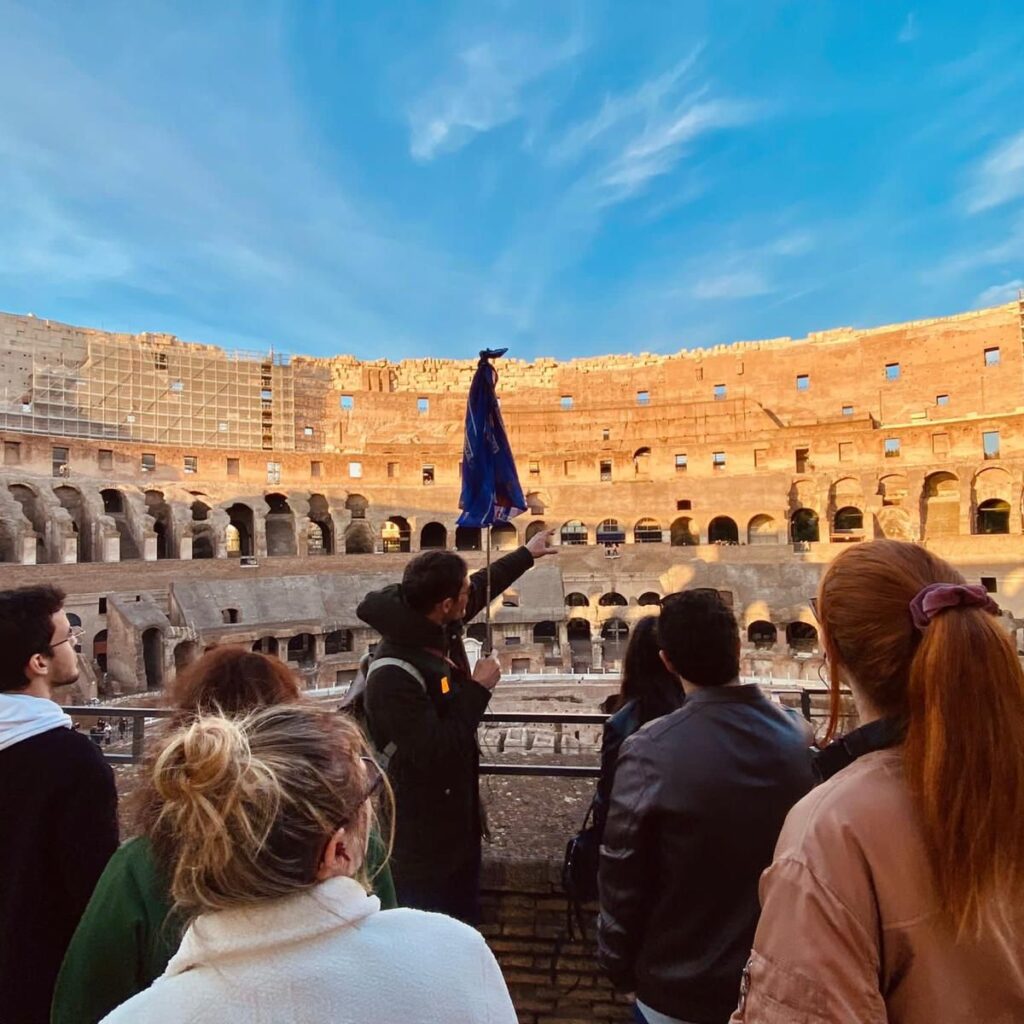
A standard ticket is not a lesser experience — it’s the classic one. You enter and walk the upper tiers, with the great sweep of the amphitheatre in front of you and the arena laid out below.
What you see well:
- The scale of the structure — the tiers, the seating hierarchy, the engineering
- A clear view down into the exposed underground, where the arena floor is missing
- The overall shape and grandeur that make the Colosseum what it is
What you can’t do: step onto the arena, or go down into the tunnels. You’re looking at both from above.
For many visitors, this is genuinely enough. If you want to see the Colosseum, understand it, and photograph it, the standard access delivers. The restricted tickets are for going deeper — literally.
What the Arena Floor Adds
The arena floor is the reconstructed platform where the combats happened — and standing on it is a completely different experience from looking down at it.
You enter through the Gladiator’s Gate, the same passage the fighters used, and step out onto the floor at the centre of the amphitheatre. The perspective flips: instead of looking down from the stands, you’re standing where the spectacle happened, with the tiers rising all around you.
What the arena floor gives you:
- The gladiator’s-eye view — the tiers towering above you on all sides
- Entry through the Gladiator’s Gate
- A look down into the underground from the edge of the floor
- The single most evocative spot in the whole monument
What it doesn’t include on its own: going into the underground. The arena floor lets you see the tunnels from above, at close range — but walking through them is a separate level of access.
What the Underground Adds
The underground — the hypogeum — is the network of tunnels and chambers beneath the arena floor, where the machinery of the games was hidden.
This is where animals were caged, gladiators waited, and an elaborate system of lifts and trapdoors hoisted them up into the arena, appearing as if from nowhere. On the underground tour you walk these passages and see the reconstructed lift and cage.
What the underground gives you:
- Walking the actual tunnels beneath the arena
- The reconstructed hoist-and-cage mechanism
- The hidden, backstage half of the Colosseum most visitors never enter
- The full picture of how the spectacles were staged
Two things to know:
- It’s guided-only. The underground is a restricted area you cannot enter independently — access is with an expert guide, in a small group.
- It usually comes with the arena floor. The underground tours generally include arena floor access too, so this is typically the most complete ticket rather than an either/or.
For the full history of what happened down there — the trapdoors, the animal venationes, the fire of 217 that gutted it — our article on the secrets of the Colosseum underground goes into the story in depth. This guide is about what you can access; that one is about what happened there.
Which One Should You Book?
Standard access if: you want to see the Colosseum, you’re on a budget, you’re short on time, or you’re visiting several sites in a day and this is one stop. It’s the classic visit and it’s not a compromise.
Arena floor if: you want the standing-in-the-arena moment — the Gladiator’s Gate, the tiers rising around you — but don’t need to walk the tunnels. It’s the emotional highlight for most people.
Underground (with arena floor) if: you want the complete experience, you’re fascinated by how the games worked, or you’ve been to the Colosseum before and want to see the half you missed. It’s the most in-depth option, and the most limited.
A note on availability: the restricted tickets — arena and especially underground — are strictly limited and sell out well before standard access. If the underground is what you want, book early; it’s the first to go.
When to See It at Its Best
The restricted access also unlocks something standard tickets can’t: the Colosseum at night.
Night tours enter through the arena floor and underground after the general public has left, and the illuminated, empty amphitheatre is a genuinely different experience from the daytime crowds. If the atmosphere matters as much as the access, the moonlight version is worth considering.
How to Book Each Level
- Colosseum with Arena Floor access — the arena experience via the Gladiator’s Gate, on the Colosseum tours page
- VIP Dungeons & Colosseum Small Group Tour — arena floor and underground, guided, in a small group
- Moonlight Tour of the Dungeons and Arena Floor — the same restricted access, at night
- Private Archaeological Rome with optional Arena access — a private option with the arena floor, plus Forum and Palatine
For the full range, see our Colosseum tours.
Practical Notes
- Restricted tickets are nominal and limited. Names must match ID, and the underground in particular sells out earliest — book ahead.
- The underground is guided-only. You cannot access it on a standard independent ticket.
- Security applies to all tickets. No large bags or pointed objects; comfortable shoes are strongly advised — the surfaces underfoot are ancient and uneven.
- The arena floor and underground involve more walking on rough ground than the standard upper-tier visit.
FAQ
What’s the difference between the arena floor and the underground at the Colosseum?
The arena floor is the reconstructed platform where combats took place — you stand at gladiator level, entering through the Gladiator’s Gate. The underground is the network of tunnels beneath that floor, where animals and fighters waited. The arena floor is seen from ground level; the underground is walked through below.
Can you see the Colosseum underground with a standard ticket?
No. The underground is a restricted area accessible only on a guided tour with special access. A standard ticket lets you see it from above, but not walk through it.
Is the arena floor worth it?
For most visitors, yes — standing in the arena with the tiers rising around you is the emotional highlight of the visit, and quite different from looking down from the stands. If the gladiator perspective is what you picture, it’s the ticket to book.
Do underground tours include the arena floor?
Generally yes. The underground tours usually include arena floor access as well, making them the most complete Colosseum experience rather than an either/or choice.
What can you see with a standard Colosseum ticket?
The upper and middle tiers, with a full view over the amphitheatre and down into the exposed underground. You see the scale and structure well — you just can’t step onto the arena or into the tunnels.
Why does the underground sell out so fast?
It’s a strictly limited, guided-only area that’s off-limits to general admission, so capacity is small and demand is high. It’s the first Colosseum ticket to sell out for any given date — book early.
Can you visit the Colosseum at night?
Yes, on specific restricted-access tours that enter after the general public leaves, via the arena floor and underground. The illuminated, empty amphitheatre is a different experience from the daytime visit.