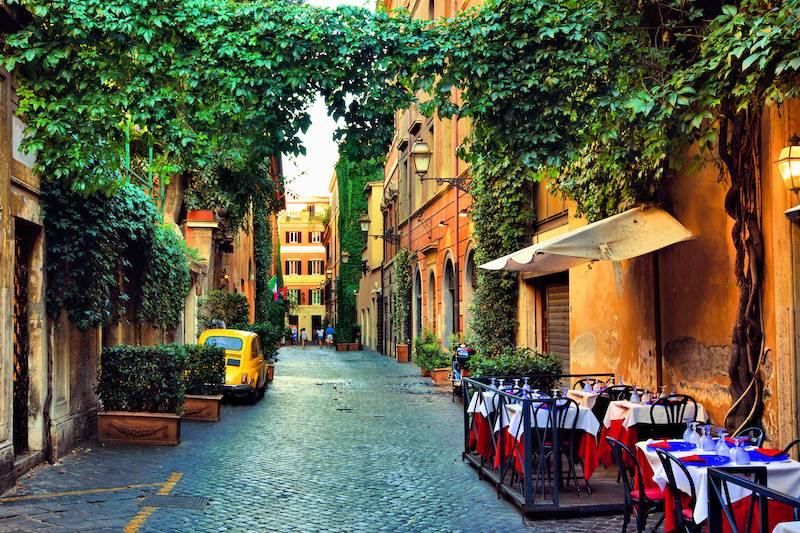
A tradition within a tradition: the culinary soul of the Eternal City comes in many facets, some of which have roots in distant epochs. This is the case, for example, with Jewish cuisine and the Ghetto where it has been passed down over the centuries to the present day. The Jewish Ghetto of Rome, located in the heart of the Eternal City, is one of the most fascinating and historically rich neighborhoods. Besides being a place of great historical and cultural importance, it is also an unmissable culinary destination. The trattorias of the Jewish Ghetto offer a cuisine deeply rooted in the centuries-old traditions of the Roman Jewish community, combining authentic flavors with a warm, family atmosphere.
Today, we will explore the most celebrated trattorias in the Ghetto, describe some of the culinary specialties that characterize this emotionally significant place not only for Rome, and reveal some curiosities that make this neighborhood unique in the world.
A Brief History of the Jewish Ghetto
The Jewish Ghetto of Rome, situated between Largo Argentina and the Tiber Island, is one of the oldest in the world, established in 1555 by Pope Paul IV. Roman Jews were forced to live in this enclosed and monitored area, separated from the rest of the city. Over the years, the ghetto expanded, and in 1849, following the proclamation of the Italian Republic, the neighborhood was liberated. Urban interventions in 1870 led to the creation of new buildings and streets. The darkest moment in the history of the Jewish Ghetto of Rome occurred on October 16, 1943, when Nazi troops rounded up over a thousand Jews at dawn. The prisoners were sent to Auschwitz two days later, where they met their death: only 16 survived the extermination.
The Trattorias of the Ghetto: An Authentic Experience
Despite the hardships, the Jewish community managed to keep their gastronomic, cultural, and religious traditions alive, developing a distinctive cuisine that combined Roman influences with Middle Eastern and Sephardic elements. The numerous trattorias that still populate the streets of the Jewish Ghetto have preserved their family traditions, becoming famous and appreciated by both Romans and tourists for their characteristic cuisine, which reflects the history and traditions of the Roman Jewish community. Although some Jewish dishes are offered by almost all the restaurants in the Ghetto, each trattoria has its own “specialties” that set them apart from the others.Here are some of the most renowned trattorias with typical Jewish cuisine:
1. Nonna Betta
Nonna Betta is one of the most famous trattorias in the Jewish Ghetto, known for its traditional dishes prepared according to family recipes. Among the must-try specialties are the “carciofi alla giudia” (Jewish-style artichokes), fried until crispy and golden, and “concia di zucchine” (marinated zucchini), a typical dish made with marinated zucchini. Nonna Betta also offers a wide selection of homemade pastas, such as rigatoni with “pajata” (veal intestines).
2. Ba’Ghetto
Ba’Ghetto is another historic trattoria in the neighborhood, offering a wide range of kosher dishes. In addition to the classic “carciofi alla giudia,” Ba’Ghetto is famous for its Roman-style cod, a savory dish made with codfish, tomatoes, and pine nuts. Traditional desserts are also available, such as the cherry tart, made with a shortcrust pastry base and sour cherry jam.
3. Il Giardino Romano
Il Giardino Romano is a trattoria that combines tradition and innovation, offering classic Jewish-Roman dishes with a modern twist. Highlights include zucchini flowers stuffed with anchovies and mozzarella, “tonnarelli cacio e pepe” (cheese and pepper pasta), and “abbacchio alla scottadito” (grilled lamb chops). The restaurant also features an outdoor garden, perfect for lunches and dinners during the warm season.
4. La Taverna del Ghetto
La Taverna del Ghetto is another culinary gem of the neighborhood, known for its authentic cuisine and cozy atmosphere. Here, you can enjoy dishes such as “supplì al telefono” (rice balls with mozzarella) and “coda alla vaccinara” (oxtail stew with celery and tomatoes). Desserts are also a must-try, with the ricotta and sour cherry tart being a true delight.
Curiosities and Culinary Traditions of the Jewish Ghetto
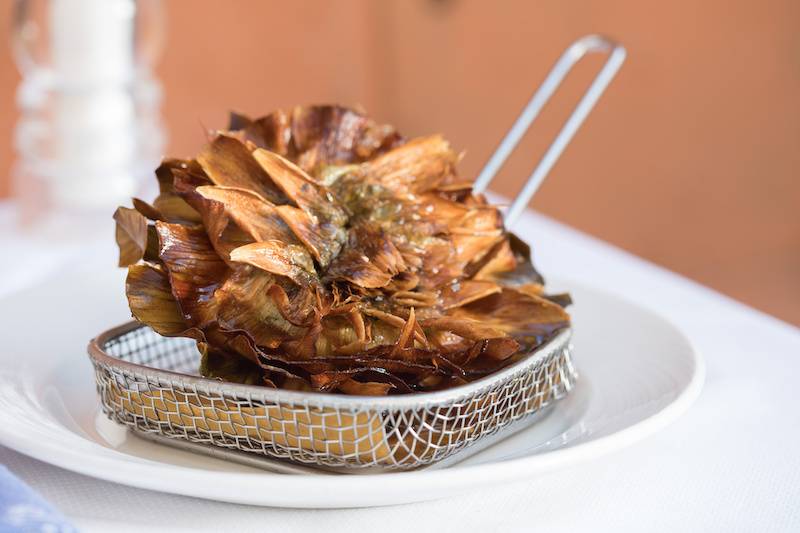
You cannot leave the Ghetto without trying the typical dishes of Jewish cuisine:
1. Carciofi alla Giudia
Carciofi alla giudia are the symbolic dish of the Jewish Ghetto. This ancient recipe involves frying whole artichokes until they are crispy and golden. Tradition has it that they are made with Roman artichokes, a particularly tender and tasty local variety.
2. Concia di Zucchine
Another typical dish is “concia di zucchine,” an appetizer made with marinated zucchini in vinegar, garlic, mint, and chili pepper. It is a simple yet extremely flavorful dish that perfectly represents the humble but creative cuisine of the Ghetto.
3. Ricotta and Sour Cherry Tart
A simple dessert that carries the strong family tradition of the Jewish people. Passed down orally over the centuries, the ricotta and sour cherry tart is a classic that should always conclude your meals in the Ghetto.
4. The Tradition of Kosher
Many trattorias in the Ghetto adhere to kosher cooking rules, which require the use of ingredients and preparation methods in compliance with Jewish dietary laws. This means that meat and dairy are never served together, and all meats must be slaughtered according to kosher rules.
Conclusions
The trattorias of the Jewish Ghetto in Rome offer an authentic culinary experience, allowing visitors to immerse themselves in the history and traditions of one of the city’s oldest communities. The dishes you can enjoy in these trattorias are the result of centuries of history, cultural influences, and gastronomic creativity. Visiting the Ghetto and savoring its dishes means not only discovering new flavors but also taking a journey through time and the culture of Rome. Every bite is a piece of history, an experience that will enrich your journey in the Eternal City with history, culture, religion, and gastronomy.