The underground areas of the Colosseum are a special and completely magical part of the archaeological site.
It is a restricted area but you can visit it with our VIP Colosseum Underground Tour, it is surely a must-see on your holiday.
The history of the Colosseum’s underground
The Colosseum’s underground levels were where the various preparations made before each show took place. The “technical” apparati were covered by the arena floor, which was full of trapdoors: men and animals appeared unexpectedly, hoisted up by freight elevators operated through complex systems of winches and pulleys.
Built in wood for the Colosseum’s inauguration, the underground levels were transformed into solid masonry under Domitian. At risk of collapses and fires due to their structural characteristics and the abundance of wood and rope, they were destroyed in the fire of 217 which seriously damaged the entire monument, causing its closure until 222.
The underground levels were rebuilt for the Colosseum’s reopening and underwent various transformations in its last two centuries of activity, until they were completely filled in. Today, the Colosseum underground stretches for half a hectare.
Fourteen corridors are visible, situated symmetrically on either side of the large central passage. Each end leads to a “control room”: symmetrical spaces which housed large freight elevators, bordered by converging tunnels used as docks for the naumachie (naval battles) which took place in celebration of the monument’s inauguration.
In fact, when the wooden arena was substituted with masonry, water shows were no longer held.
They have recently been renovated and are even more beautiful and impressive than ever.
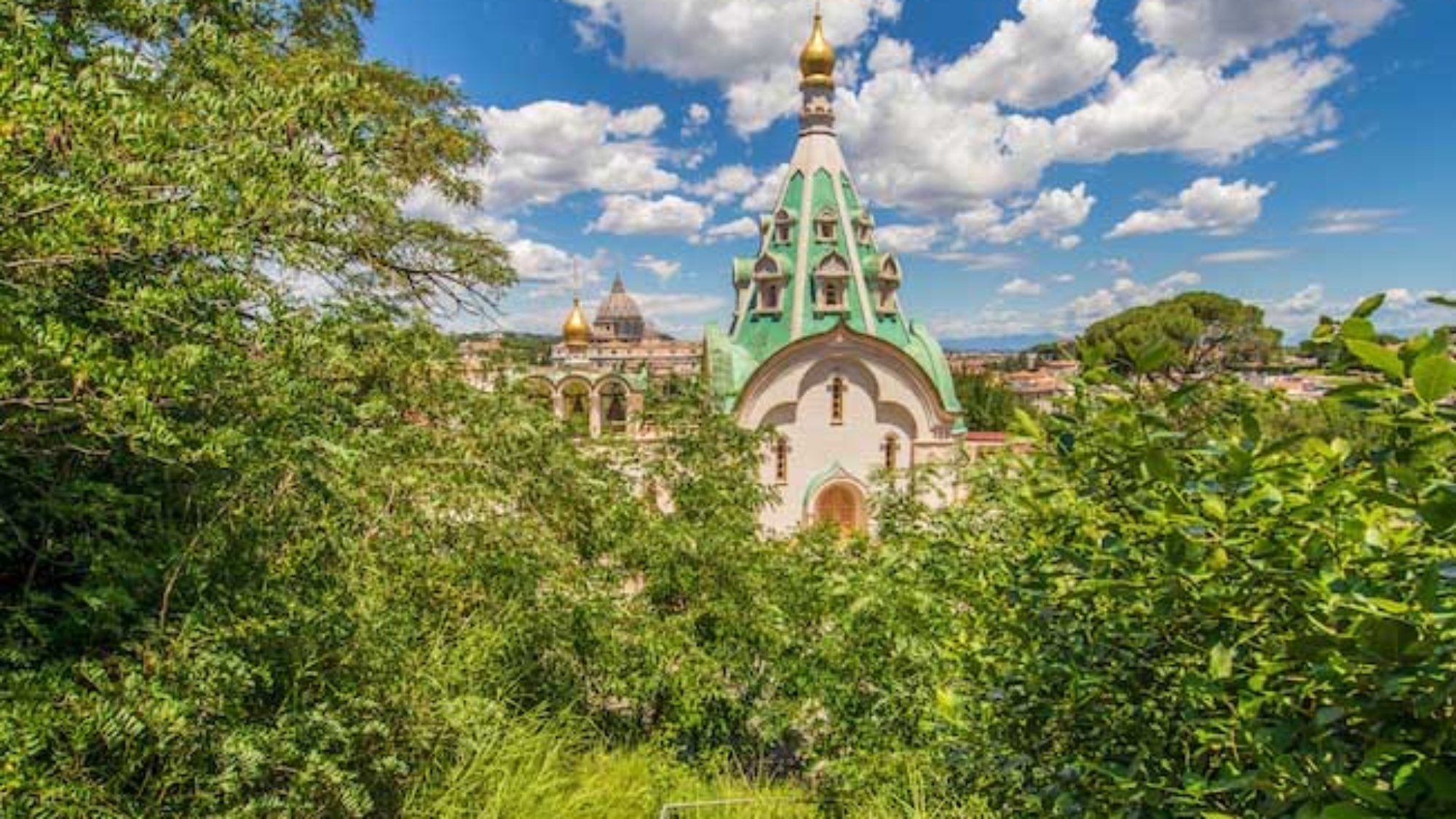
Inaugurated on 23 May 2009 and dedicated to St. Catherine the Martyr (or St. Catherine of Alexandria), the church stands inside Villa Abamelek, the residence of the Ambassador of the Russian Federation.
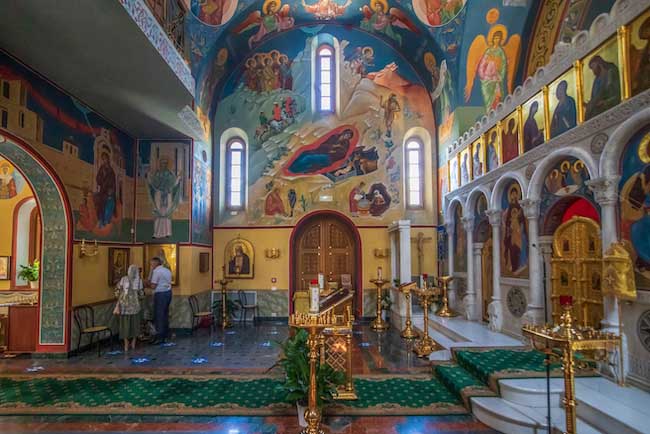
Inside the building there is a crypt dedicated to Saints Constantine and Helen.
The church is a charming and very spiritual place where the Orthodox Christian faithful of the city of Rome gather. These are mainly people of Russian origin, but also Bulgarian, Ukrainian or Moldavian. This little corner of Russia in the Eternal City is also a perfect destination for those who want to admire Byzantine Orthodox architecture without leaving Italy. Here is the history and characteristics of this very special church.
Iconic gilded statues, elegant paintings, refined Byzantine mosaics and a splendid aqua-green roof: this is a real gem that will allow Italian visitors to discover a different architecture and culture but perfectly integrated with the Roman landscape!
You can discover this Church during one of our Vatican Tours.
The history of the Church of St. Catherine the Martyr
The birth of this religious building is relatively recent, dating back to the year 2000, when Andrej Obolenskij, director of the Moscow Patriarchate’s ‘Archkram’ Centre for Artistic Construction, proposed a project for the construction of a new Orthodox church adjacent to the residence of the Ambassador of the Russian Federation at Villa Abamelek, on the corner of Via Lago Terrione and Via delle Fornaci (in the Russian Federation’s area).
In these spaces not far from the Vatican and very close to St. Peter’s Station, the Church of St. Catherine Martyr was built, considered the only true jewel of Russian architecture in the heart of Rome. Thanks to its position and its particular shape, it is clearly visible in the city and can even be glimpsed from the dome of St Peter’s, a rather poetic thing that seems to suggest a certain closeness between Catholicism and Orthodoxy.
Today, the Church of St Catherine Martyr is the largest Russian Orthodox place of worship built abroad after the 1917 revolution, a truly important place for the people of Russia and for many other Orthodox Romans that can be visited freely, even during interesting liturgical celebrations.
Fun fact about Church of St. Catherine the Martyr
Do you know what was one of the fundamental reasons why the Catholic Church allowed this church to be built?
Well because the Orthodox Church accepted a great compromise, that of ensuring that the high Orthodox crosses in Rome did not rise above the dome of St Peter’s. That is why at the time of construction, the hill on which the church was erected was hollowed out by almost 10 meters, so as not to overhang St Peter’s dome. But the small/great revenge of the Church of St Catherine Martyr is that the sound of its bells instead travels through the air every Sunday, even reaching St Peter’s Square, flooding it with music. Just think that the master bell-ringer is a specialist trained by the head of the Moscow Kremlin Cathedrals, and it is said that his melody is so beautiful and powerful that it attracts the attention even of the frequenters of the more ‘lofty’ St. Peter’s.
The Palio is not an event exhumed and organised for tourist purposes: it is the life of the Sienese people over time and in its various aspects and feelings. It has remote origins, with some regulations still valid today since 1633, the year in which the first Palio with horses is documented with certainty, as it still is, in continuity that has never been interrupted (with the exception of the period of the two world wars of the 20th century).
The history of the Palio di Siena
The territory of the City is divided into seventeen Contrade with boundaries established in 1729 by the Bando di Violante di Baviera, Governor of the City.
Each Contrada is like a small state, governed by a Seggio headed by the Prior and guided in the ‘joust’ by a Captain, assisted by two or three contradaioli called ‘mangini’ or ‘tenenti’.
It owns, within its territory, a Church, known as the “Oratorio”, with its official headquarters attached, and a Museum, where all its heritage is kept: relics, victory drapes, costumes of the Comparsa – those in use and many of ancient date – flags, archives and everything else concerning the life of the Contrada itself.
This leads to the morning of 29 June (for the July Palio) or the morning of 13 August, when the intense four days of preparation for the Palio begin.
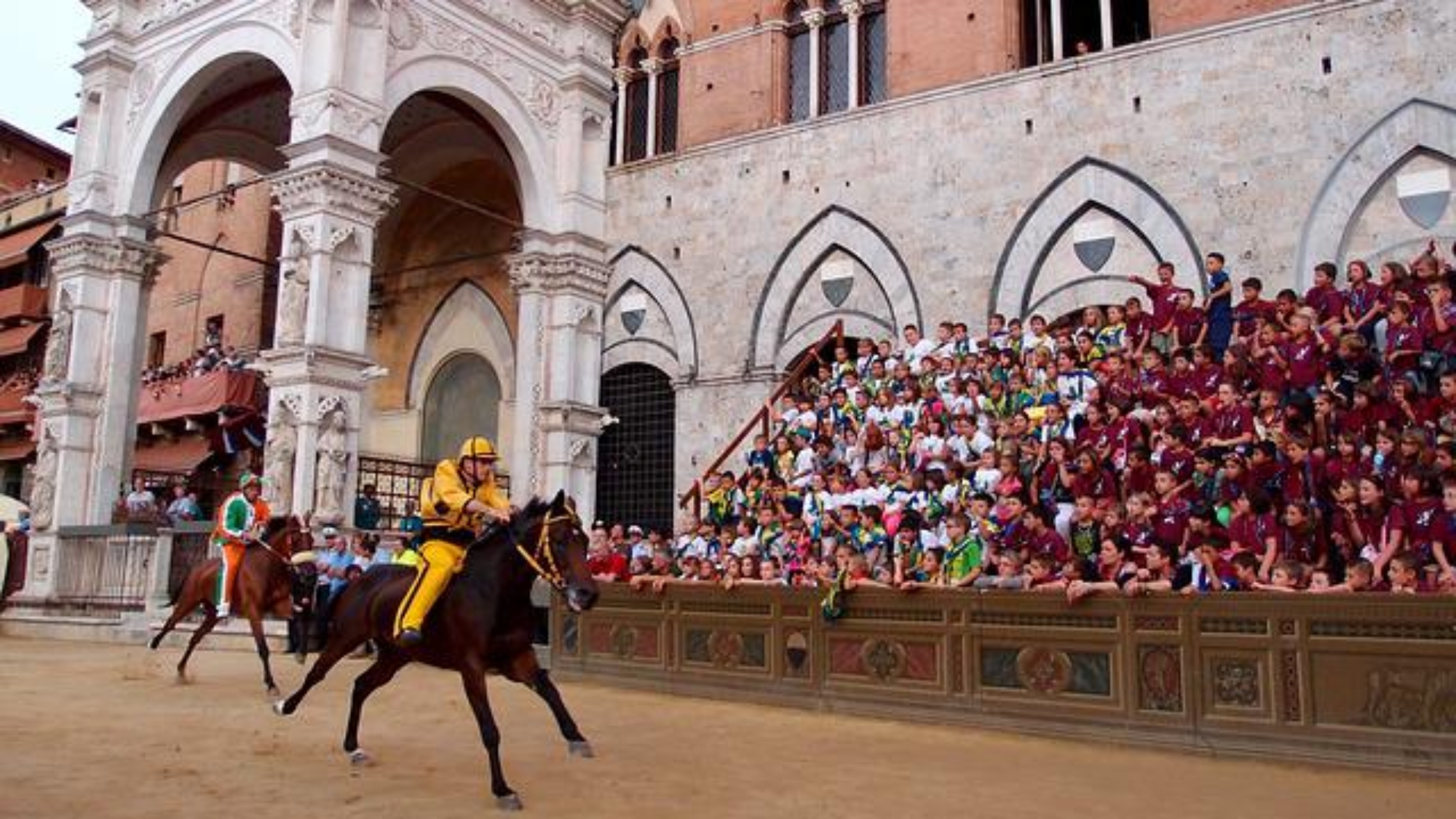
The complex mechanism of the festival reaches its completion with the bursting of the mortar that announces the exit of the horses from the Entrone. Each jockey is given an ox-bone with which he can incite his horse or obstruct his opponents during the race. They then proceed to the ‘mossa’, the point where two ropes are stretched between which horses and jockeys will be called to line up. The order of entry is established by fate, in fact the Contrade are called according to the order in which they are drawn, decided secretly and declaimed aloud by the mossiere. Absolute silence reigns in the Piazza. The tenth and last one, on the other hand, will enter in a ‘run-up’ order when it is considered most opportune, thus deciding the moment of departure. If the start is not valid, a burst of the mortar will stop the horses. The latter will have to complete three laps of the track for about 1,000 metres and only the first to arrive will be reserved for the glory of victory. The winner, however, is the horse, in fact it can also arrive ‘shaken’, i.e. without a jockey.
The celebrations begin immediately: the contradaioli receive the Palio and with it they go to the Basilica of the Madonna di Provenzano (for the July Palio) or to the Cathedral (in August) to sing the Maria Mater Gratiae of thanksgiving to the Madonna. From then on, every occasion will be a good one to remind the city of the victory conquered on the Campo, until the autumn, when, between September and the first days of October, the ‘victory dinner’ will be held in the festively decorated victorious district, attended by thousands of contradaioli and, in the place of honour, the victorious horse, a truly admired hero.
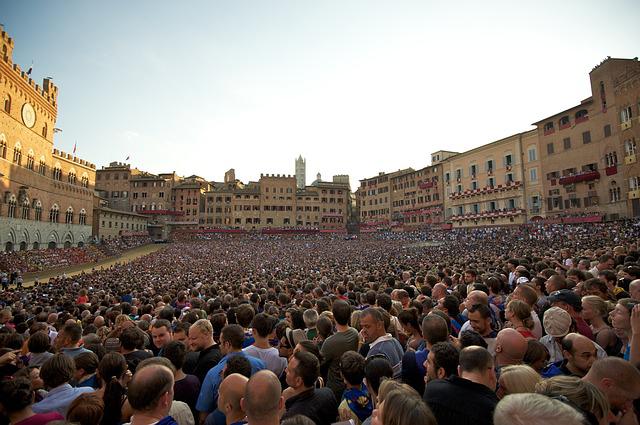
The complex mechanism of the festivity reaches its completion with the bursting of the The Palio di Siena is a centuries-old celebration in which the entire Sienese people spontaneously participate without the need for an official organisation to coordinate the various services. For this reason, even the sale of seats in the grandstands, balconies and windows is carried out individually by the respective owners, who often have shops overlooking the Piazza del Campo or homes in the adjacent streets.
Today we are going to talk about some of the most interesting Ancient Jewish districts of Italy, respectively the one in Venice, the one in Rome and the one in Pitignano.
The Jewish districts were called Ghetto, the word ghetto, so widespread in all languages, originates here, from the Venetian word ‘geto’. In ancient times, in the early Middle Ages, there was in fact an ancient foundry (a “geto”’ in Venetian) in this part of the city that was used to forge the bombards, the small cannons of Venetian ships. When, for political reasons, the Serenissima Republic established by law in 1516 that all Jews had to live and reside here, the population came mostly from Central and Eastern Europe and it was because of their pronunciation that the Venetian term ‘geto’, was mispronounced as ‘gheto’ (read German), giving rise to the term we use today all over the world.
The Jewish district in Venice
The Jewish presence in Venice is attested even before the year 1000, although it will be necessary to wait until the late 14th century to appreciate a consistent and stable settlement. Little by little, in spite of the alternating permits and prohibitions to stay in the city, the Jews became a considerable nucleus in Venice and, feeling the need to organize their presence, the government of the Republic, with a decree of 29 March 1516, established obligations and restrictions for the entire Jewish population. It was thus decided that all of them had to live in a single area of the city, without being allowed to leave either at night or during Christian holidays.
The ghetto area already looked like it does today: a small island, surrounded by canals, with access only via two bridges. At these, there used to be strong gates, which were closed and guarded at night, as the inhabitants were only allowed to leave the district during the day and with special signs. If you pay attention, even today, you can still see the holes where the hinges of the gates sank.
You can discover the Jewish District in Venice with one of your Venice Tours.
The Jewish district in Rome
View from the old Jewish Ghetto of Rome
The Jewish ghetto in Rome is among theoldest ghettos in the world; it arose 40 years after the one in Venice, which is the first ever. The term derives from the name of the Venetian district, “ghetto”, where there was a foundry (gheto in Venetian), where the Jews of that city were forced to reside; another possible etymology traces the origin of this word back to Hebrew, meaning separation. The Jewish Ghetto of Rome represents one of the most beautiful hidden treasures of the capital. Visiting this small neighborhood, bordered by the Tiber on one side and Piazza Venezia on the other, is not only a cultural and religious experience, because of the Synagogue and the Jewish Museum, but also a gastronomic one, thanks to the numerous typical restaurants scattered throughout the ghetto.
Rome’s ghetto is considered the oldest in the western world. It was Pope Paul IV who ordered its construction in 1555, revoking all rights granted to the Roman Jews and originally providing it with only two entrances to enter and exit. Life for the Jews was very hard and was subjected to a series of obligations and prohibitions: the obligation to reside within the ghetto and to always carry a distinctive sign of belonging to the Jewish community, prohibition to engage in any kind of trade except rags and clothes and to own real estate.
The Jews made a virtue out of necessity and, thanks also to these prohibitions, became shrewd clothing merchants and skilled businessmen in the field of loans.
At dawn on 16 October 1943, the Nazis surrounded the neighborhood and captured more than 1,000 Jews by forcibly removing them from their homes. Two days later the prisoners were loaded onto the wagons of a train bound for Auschwitz: of the 1,023 deportees only 16 survived the extermination.
Over the years, the ghetto increasingly expanded its territorial boundaries until the ‘liberation’ of 1949 when, following the proclamation of theItalian Republic, segregation was abolished. In 1970 the Jews were put on an equal footing with Italian citizens and over the years the old streets and buildings were demolished to make way for new buildings and the construction of three new streets: Via del Portico d’Ottavia, Via Catalana and Via del Tempio. The Jewish Ghetto was built over some roman ruins and now a days it is interesting to see how roman buildings merge into medieval buildings.
Discover with our Rome Tours the Jewish District in Rome.
The Jewish district in Pitigliano, Tuscany
In the heart of Italy, in the Tuscany region on top of the hills there is a medieval village that stands on a tufa rock, this village is also known as the “Italian Jerusalem” its name is Pitigliano. The village has an amazing historic center with ancient palaces and churches but one of the most important historical sites is the ancient Jewish district that starts from Via Zuccarelli.
The Jewish district was built from the second half of the 16th century when the village was ruled by the Orsini family, after the arrival of the Jewish community, the Ghetto was the hub of Jewish community life in the Tuscan village.
In the decades following the arrival of the Jewish community in Pitigliano, at the end of the 16th century, the Synagogue, the ritual bathhouse, the unleavened bread oven, the kosher butcher’s shop and the wine cellar were built. Outside the historical center instead, just outside the village of Pitigliano, is the Jewish Cemetery.
Italy preserved an incredible historical Jewish Heritage and it is really worth to visit it.
Today we will speak about Christian Rome and the many testimonies and relics found in the city the you can discover with our Christian guided tour of Rome.
Surely one of the most important woman of the Christian world in Rome is St Helena the mother of the first Christian emperor, Constantine.
When her son Constantine, defeating his rival Maxentius, became absolute master of the Empire, Helena, whose honor was rehabilitated, was given the highest title to which a woman could aspire, that of ‘Augusta’. It was the beginning of a new era for Christianity: the emperor Constantine, after his victory, attributed to the protection of Christ, granted Christian’s freedom of worship.
A fundamental role was played by his mother Helena: perhaps she contributed to the conversion of her son at the point of death. Helena testified to great religious fervor, performing good works and building the famous basilicas on holy sites. She found Christ’s tomb dug into the rock, and shortly afterwards the Lord’s cross and those of the two thieves. The discovery of the cross in 326 under the eyes of the pious Helena produced great excitement throughout Christendom. These discoveries were followed by the construction of as many basilicas, one of which, on the Mount of Olives, bore his name. She died around 330, in an uncertain place.
The relics of Holy Jesus’ Cross
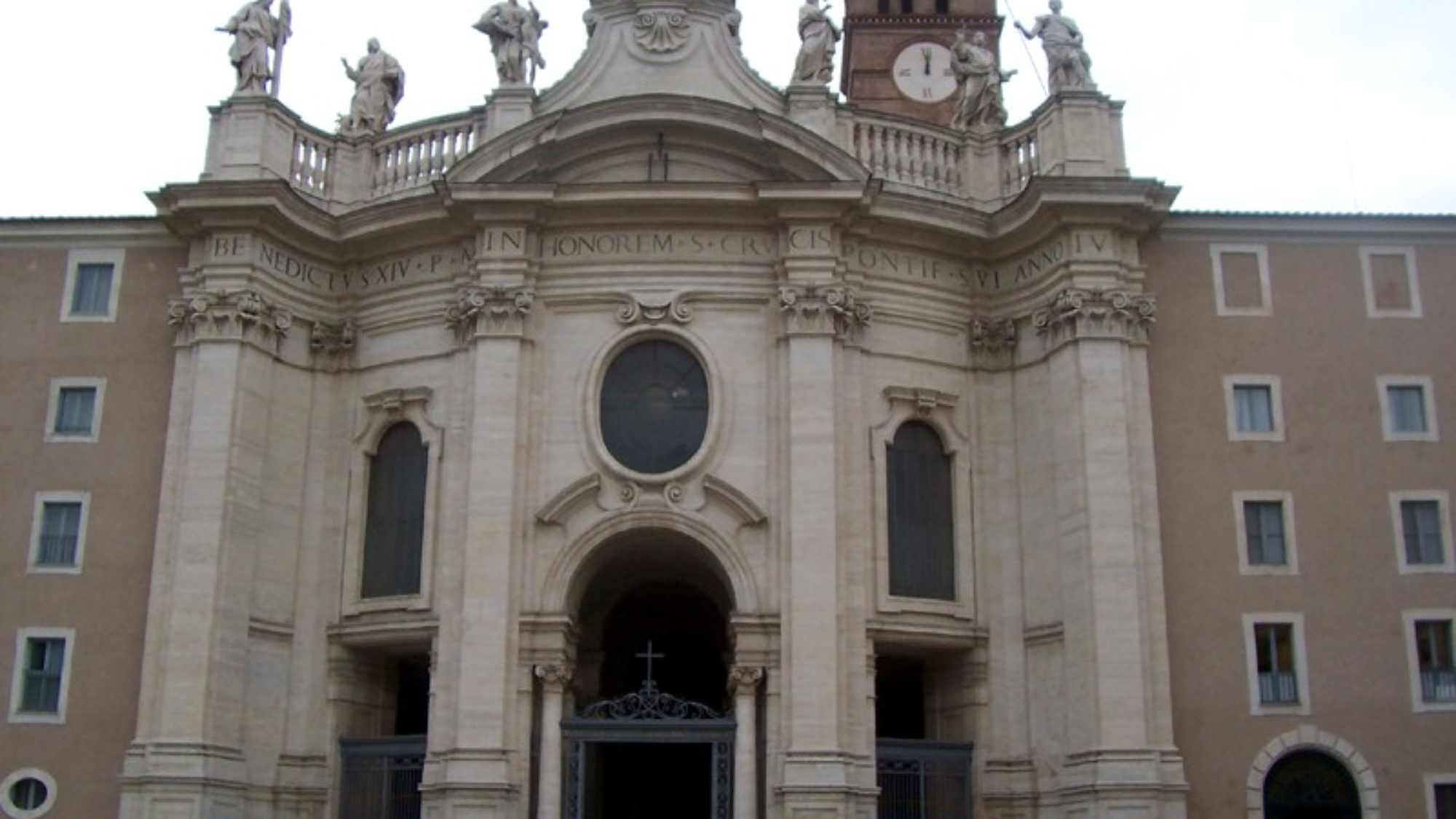
It was an archaeologist Helena who, according to legend, found the cross of Christ. Following her conversion to the Christian faith, the tale of tradition takes hold: Helena, according to some already elderly, undertook a journey to Palestine in order to visit the holy places. It was here that, while excavating to cleanse the place of pagan temples, she found the cross on which Jesus Christ was crucified and his tomb. Saint Helena brought to Rome some of the relics of Holy Jesus’ Cross. In Rome in a very special area called San Giovanni there is the Basilica of the Holy Cross in Jerusalem where the Holy Cross is preserved, the Basilica of St. John in Lateran with the Skulls of St. Peter and Paul and the Holy Stairs from where Jesus Christ descended after been condemned by Pontius Pilate.
Today we focus on Saint Helena, it is interesting what Eusebius of Caesarea describes when speaking of Helena’s journey to the East. Eusebius speaks of a real pilgrimage, a fact that would attest to Helena’s presence in Jerusalem and link Constantine’s mother with the finding of the relic. The records of the cult of the cross in the basilica of the Holy Sepulcher in Jerusalem from the 4th century onwards point to the hypothesis that the legend originated at that time and spread very quickly. According to tradition, she also found the cave of the Nativity in Bethlehem. Helena died in Trier shortly after returning from that journey, in 329.
St Helena’s tomb monument is located in the region formerly known as ‘ad duas lauros’, crossed by the Via Labicana, today Via Casilina.
The name probably derives from the presence of two laurel trees, evidence of a forest, or from the decoration with laurel branches on the walls of a villa. There was in fact a large villa here, perhaps to be identified with that of the Christian Flavians, chosen as the residence of the empress Helena. After her conversion, Emperor Constantine had a basilica built around 320 AD, dedicated to Saints Marcellinus and Peter, who were buried in the nearby catacombs.
Later, between 326 and 330 A.D., a Mausoleum with a circular plan and vaulted roof was built next to the eastern façade of the basilica, probably intended as a funerary monument for the emperor and the imperial household, but later used for the burial of St Helena, Constantine’s mother.
The monument is popularly known as Torpignattara, due to the presence of amphorae (pignatte) inserted in the cement mix of the vault, in order to lighten the weight of the casting.
It is divided into two superimposed cylinders. In the lower one there were eight alternating rectangular and semicircular niches, one of which was the entrance. In the other niches were the sarcophagi. That of St Helena was placed in the largest niche.
After being moved to the Lateran by Anastasius IV (1153-1154), St Helena’s sarcophagus was brought to the Vatican by Pius VI (1775-1799), and is now in the room known as the Greek Cross in the Vatican Museums. St. Helena’s body, on the other hand, was laid to rest in the 12th century in the church of Santa Maria in Ara Coeli.
The sarcophagus is made of red porphyry, and features a decorative motif with military scenes. This suggests that it was originally intended not for Helena, but for her son Constantine or her husband Constantius Chlorus. The upper cylinder, accessed by a staircase between two niches, has eight windows at the lower niches. The walls were covered with marble slabs; there was also an altar for services in suffrage of St Helena.
During the Middle Ages, the mausoleum was used as a fortress and dwelling place, as some 16th-century maps also testify.
In 1632, a small church dedicated to Saints Marcellinus and Peter was built inside it by Pope Urban VIII.
Finally, under Pius XI, the modern church next to the monument was built, also dedicated to Saints Marcellinus and Peter.
Rome is a very special city and for all those looking for finding Christian Heritage is really one of the best cities to visit and to spend time.
Welcome to the local market in Rome’s most authentic district. An unmissable gastronomic hub, an ideal meeting point for all gourmets. A large covered square for shopping and leisure that you can discover with our Rome food tour.
Conceived along the lines of the open-air markets in Rome’s piazzas – open on all four sides, covered and protected from sun and water but with transparent, perforated panels from which light and air filter – the architectural design bears the signature of architect Marco Rietti.
A market and an archaeological area
The Testaccio Market is always open to culture and entertainment, with appointments and special days dedicated to show cooking, tastings, educational workshops, archaeological visits, DJ sets and concerts: the best opportunities to meet starred chefs and sommeliers, listen to good music and enjoy the most authentic spirit of Rome’s most vital market.
But the market also hides an archaeological area. A visit to the archaeological site is a journey through the history of the Testaccio district, where since the times of the early Roman Empire, loads of amphorae have been arriving and departing, not by chance becoming the historical symbol of the district.
At the moment, the site can be visited with prior reservation.
But let’s move on to the main topic of this blog: food.
Typical Roman street food
Today we are going to talk about Roman street food, which is very varied and all delicious.
It can be said that the street food for excellence in Rome is pizza, from here a world of possibilities opens up: white pizza from the oven served still warm, the low and crispy red pizza with lots of oil on top, which drives both young and old crazy, and the pinsa romana, different in shape and dough.
Another great classic is the supplì al telefono.
Do you know why it is called on the phone? Because when you open it, the stringy mozzarella filling forms a thread that you can associate with the telephone thread.
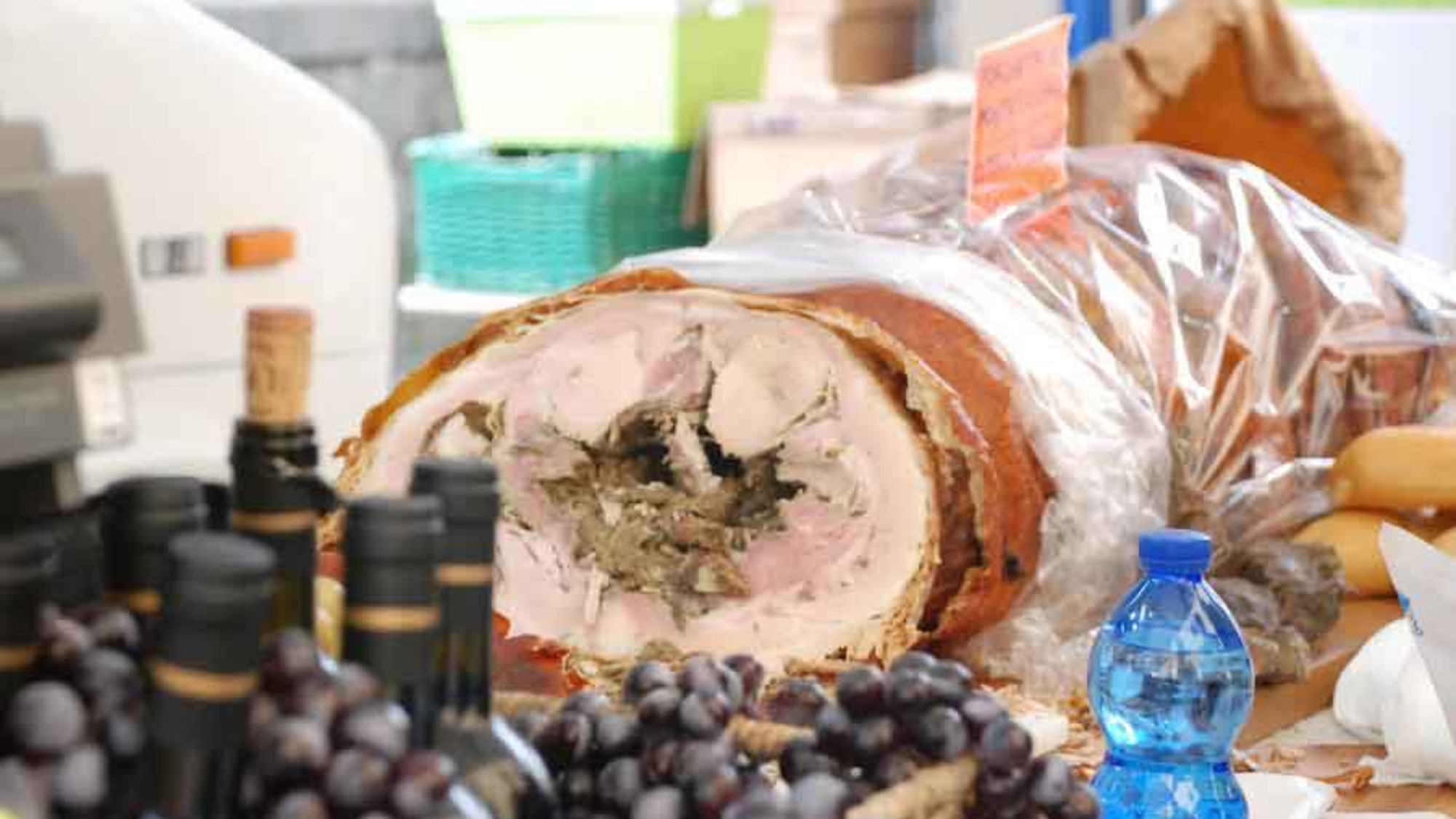
Last but not least we talk about his majesty the porchetta sandwich, two slices of homemade bread and warm porchetta, what more do you want?
Paolo of Tarsus (Saul), better known as Saint Paul, was one of the apostles. He is referred to as the apostle to the Gentiles, and the first missionary of the Christian message to the pagans. Paul was a Jew, initially against the new Christian church, he made it his mission to convert people to Christianity.
During his journey from Jerusalem to Damascus to organize the repression of the Christians in the city, he was suddenly enveloped by a bright light and heard the voice of Jesus saying to him: “Saul, Saul, why do you persecute me?”.
Blinded by this divine light, he wandered for three days in Damascus, where he was healed by the leader of the small Christian community in that city, Ananias.
Comforted by this light, he returned to Damascus and began to preach with enthusiasm, arousing the anger of the pagans, who considered him a renegade and even tried to kill him. This was the starting point for his many apostolic journeys with the aim of converting as many people as possible to Christianity.
In Jerusalem he found a very tense atmosphere, the Jews were suspicious of him, and in the end he was accused of having brought a non-Jewish Christian into the temple, thus desecrating it. This provoked the reaction of the crowd and only the intervention of the tribune Claudius Lysias saved him from being lynched; convinced, however, that Paul was a prejudiced Egyptian, he had him flogged, despite his protests that this was illegitimate, since he was a Roman citizen.
Lysias took him to prison and the next day, wanting to get rid of the tricky question, sent the Apostle under escort to Caesarea, to the procurator Antonio Felice, who held him for two years, hoping for a ransom.
His successor Portius Festus, in 60, arranged for a trial against him in Jerusalem, but Paul opposed this and as a ‘civis romanus’ appealed to the emperor. As soon as it was possible, he was handed over to the centurion Julius to be transferred to Rome, where he arrived in 61. Here he was allowed to stay in a rented room, in a kind of probation awaiting a trial that never took place, due to the non-arrival of the accusers from Palestine.
The Church of San Paolo alla Regola
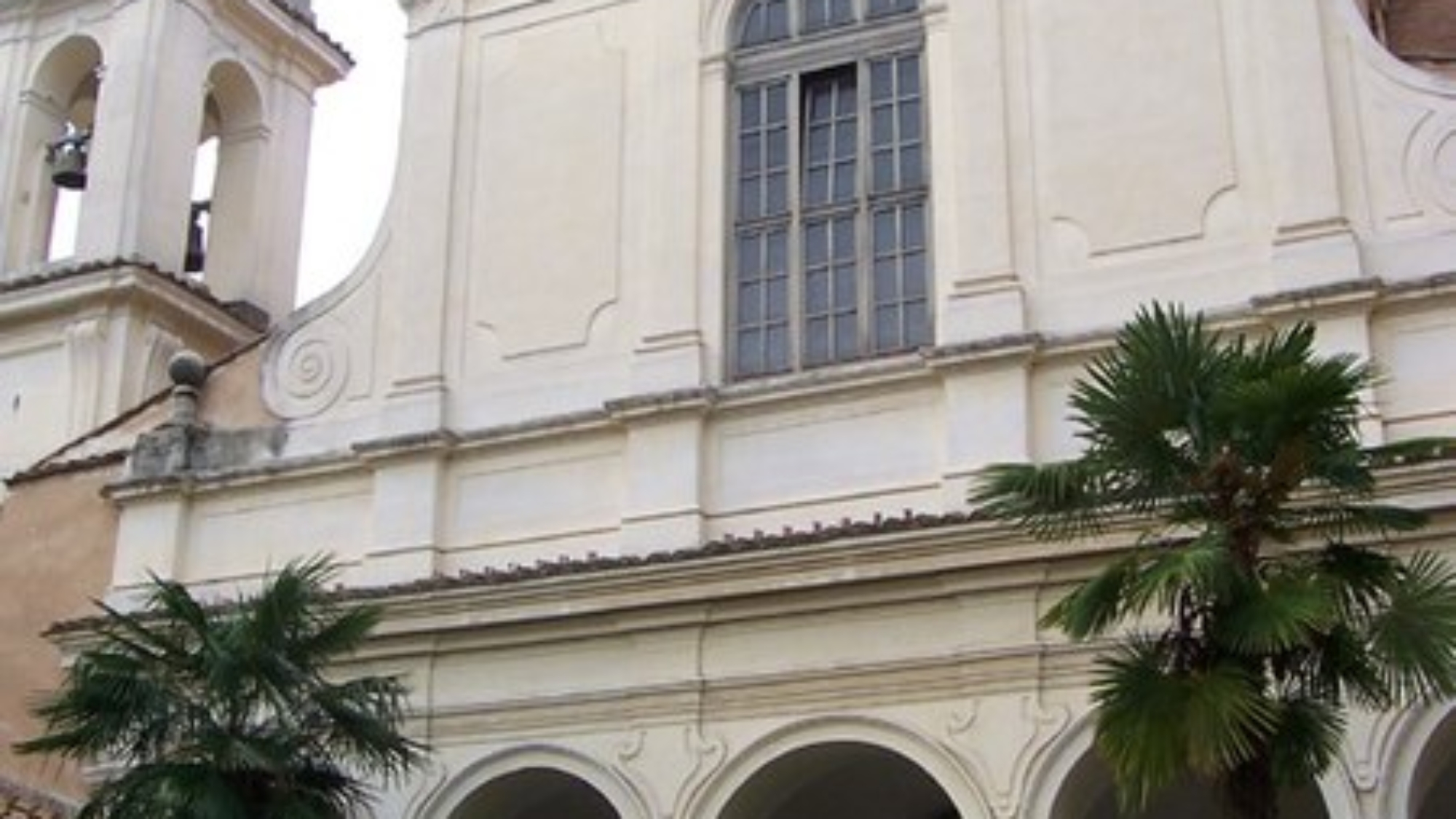
It is said that the room where Paul stayed is today’s Church of San Paolo alla Regola, in fact the apostle’s room is still preserved inside, transformed into a chapel. The church, called ‘S.Paolino’, is very old: the first official mention dates back to a bull by Pope Urban III in 1186. After being officiated for a long time by the friars of St Augustine, in 1619 the church was entrusted to the Franciscans of the Third Order Regular of St Francis of the Sicilian Nation, who established a ‘Collegium Siculum’. The College, under the direct protection of King Philip IV of Spain, was efficiently equipped with a substantial library and archives (both of which were destroyed in the turmoil of the first Roman Republic in 1799), as well as a very precious relic of St Paul, no less than part of his arm.
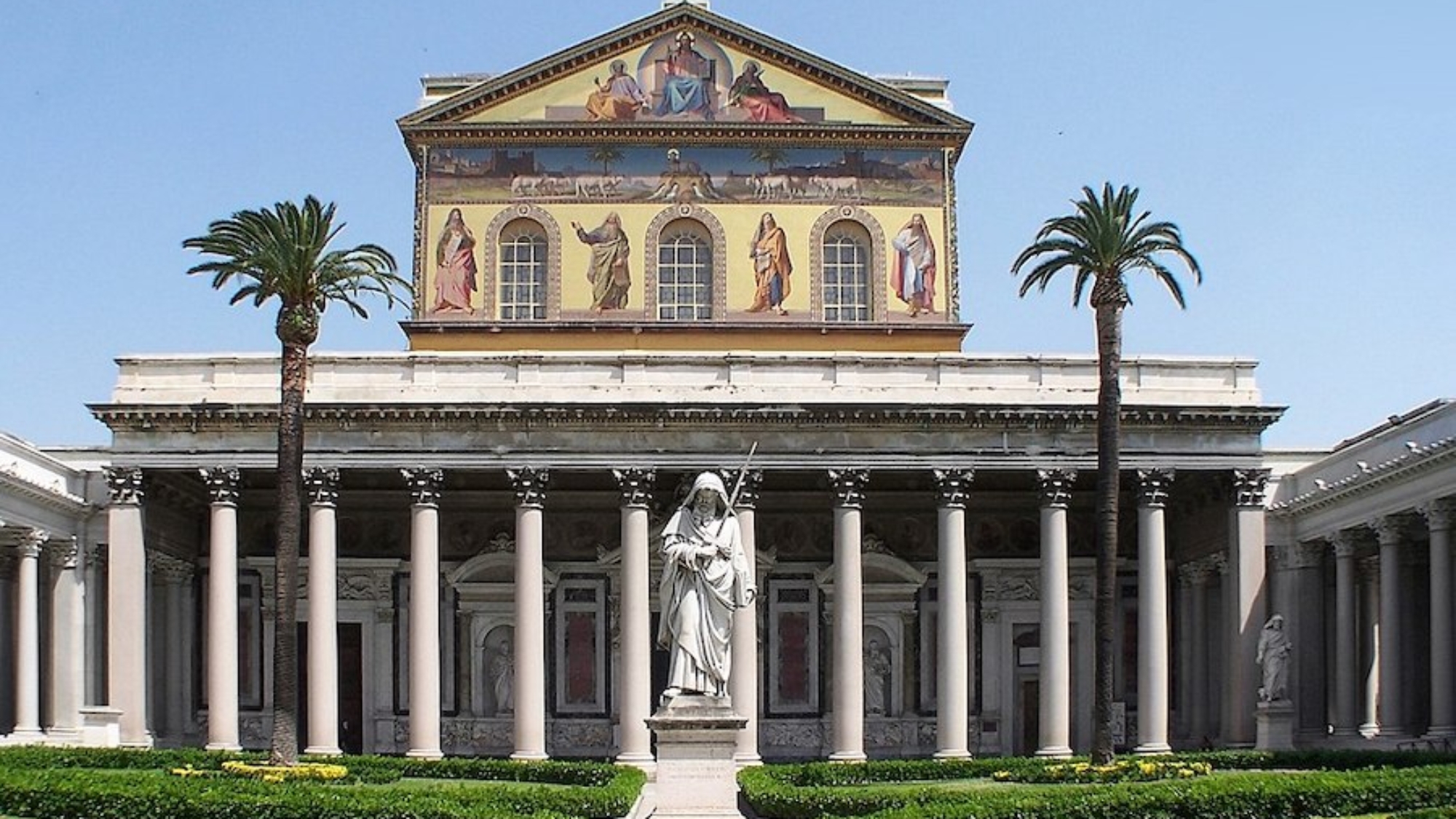
In 66, probably in Nicopolis, he was again arrested and taken to Rome, where he was left alone by his disciples. This time the Roman court condemned him to death because he was a Christian; he was traditionally beheaded on 29 June of an unspecified year, perhaps 67, but as a Roman citizen he was spared crucifixion. The sentence took place in a place called ‘Palude Salvia’, near Rome (later called ‘Tre Fontane’, a name derived from the three gushes that gushed out when his severed head bounced three times on the ground); the Christians collected his body and buried it on the Via Ostiense, where the magnificent Basilica of St Paul Outside the Walls was later built.
The Mamertine Prison
We can assume that the location where St Paul was taken during his second arrest is the Mamertine Prison. The Mamertine, located on the Clivo Argentario below the church of San Giuseppe dei Falegnami, was the oldest, and for a long time the only, prison in Rome, built by King Anco Marzio. It was the symbolic prison for illustrious prisoners in ancient Rome and it is no coincidence that it is located in a very central area, close to the Via Sacra in the Forum. For about a thousand years, it housed in shackles the great enemies of the people and the state, the great losers and traitors of Rome: from the Samnite king Pontius, to the king of the Gauls Vercingetorix and the conspirators of Catiline. The prison consists of a trapezoidal room, built of blocks of tufa from the Aniene river. The original entrance consisted of a small door at a higher level than the present floor, now walled up, which opened in the right wall. Beyond this door were the other rooms of the prison, known by the name of “Lautumiae“, because they were built in ancient tufa quarries. In the floor there is a circular hole that was once the only entrance to the room below, which is now accessed by a modern staircase. This was the most secret and terrible part of the prison, known by the name of “Tullianum“: here prisoners of state were thrown and then strangled.
This is just a small part of St Paul’s life linked to some of Rome’s most important monuments the you can discover with our Private Tour in the footsteps of Saint Paul. Stay tuned for further interesting stories.
When you visit San Clemente and its underground passages you will be fascinated and amazed by this unique Church.
In the Monti district, on the route from San Giovanni in Laterano to the Colosseum, stands the Basilica of San Clemente.
The History of the Basilica
The basilica that we admire today was founded in the 12th century and its peculiarity is due to the fact that we can still see three different periods of its construction/history at three different depth levels, the convent is located above ancient buildings buried two levels deep, the oldest of which dates back to the 1st century AD; the two levels below the present basilica were rediscovered and brought to life in 1857 thanks to Father Joseph Mullooly, then prior of the convent.
The three levels are, from above: the present basilica, medieval; the ancient basilica, in a building once the home of a Roman patrician; a set of Roman buildings from the post-Neronian period. A fourth level below the previous ones contains traces of older Roman buildings.
The first two subterranean levels have been brought to light and reinforced, and are now mostly accessible and open to visitors. The richness of its architectural, artistic and historical elements, spanning almost the entire Christian era, makes it a unique monument in the history of art in Rome.
The official entrance of the basilica, which is only used on ceremonial occasions, is from St Clement’s square through a small brick prothyrum and two Roman columns.
The underground passages of San Clemente Basilica
Through a hidden staircase we can begin our adventure in underground Rome, the access to this priceless treasure is in Via San Giovanni in Laterano and we will descend to 10 metres below ground, the lowest level of the complex.
This is the site of the ancient city dating back to the 1st century, which in the 4th century, having been abandoned for a long time, was buried and the first basilica was built on the upper level, which was declared uninhabitable due to structural failure and this level was also buried in the 11th century.
In the lower basilica, at the west end of the south nave, are believed to be the relics of St Cyril, evangeliser of the Slavs, who brought the relics of St Clement to Rome from the Crimea.
Ascending one level, you enter the present basilica, founded in the 12th century.
The interiors of the Basilica
The interior of the basilica is divided into three naves, without a transept, with a semicircular apse; the naves are separated by bare Roman columns. In the central apse is preserved the wonderful mosaic, made shortly after 1100, with Christ crucified between the Virgin and St John the Evangelist in the centre.
In the nave is one of the most famous frescoes in the basilica, not just because of its artistic importance, but also because the lower panel of the painting contains transcriptions of phrases expressed in a language intermediate between Latin and the vulgar tongue. These inscriptions (datable between 1084 and early 1100) constitute the first example where the Italian vernacular appears to be written and also used with artistic intent.
The painting depicts a fragment of the Passio Sancti Clementis in which the patrician Sisinnius is ordering his servants to tie and drag St Clement. The servants, blinded like their master, are instead carrying a marble column. The first part is all in the vernacular, with clear Romanesque influences, the second part is written in Latin and is a free quotation from the Passio, where the text reads: “The hardness of your heart is turned to stone; and since you consider stones gods, you have deserved to drag stones”.
Tickets and how to reach information
The ticket price is 10 euros for adults and 5 euros for children, if you want to add the guided tour offered directly from the church it is 8 euros for adults, children free.
Easily reachable with a walk of less than 10 minutes from the metro station Colosseum.
All the information you need to organize your visit to the Basilica of San Clemente are now in your hands.
So what are you waiting for?
Take advantage of the beautiful spring days in Rome to go for a walk and book a Colosseum Tour after visiting the basilica.
Come with me to discover a typical Easter lunch in Rome, imagine sitting down with your family for this celebration and enjoying the local delicacies.
Are you ready for this culinary tour de force? Only the bravest will make it to the last course!
Let’s start with the fundamentals, Easter is celebrated with the family, big or small, that’s the way things are. You might be able to celebrate with friends, but if you have a grandmother like mine you won’t be allowed to. If you want to be with friends, there is Easter Monday, where we usually have a barbecue in the park, always threatened by the misfortune of rain. This is not a euphemism if you are in Rome on Easter Monday you can be sure that it will rain 100%….
The typical Easter breakfast in Rome
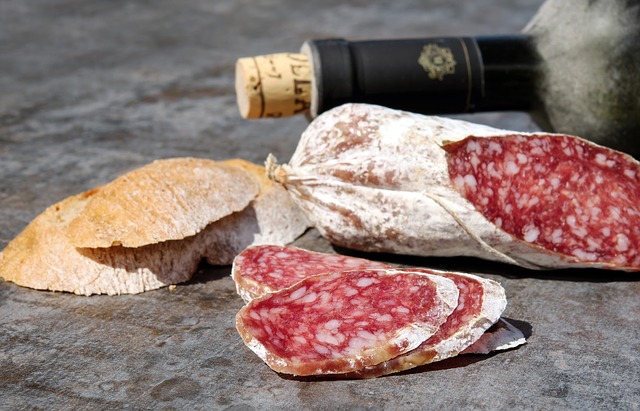
I should mention that before lunch we have our Easter breakfast, which is usually very rich and includes a large number of dishes ranging from sweet to savory: cold meats and sausages of all kinds, including the typical Corallina, hard-boiled eggs, savory pies, hot homemade bread or toasted bread and the famous beaten pizza.
Already tired from breakfast, now the main meal of the day awaits us.
Authentic Easter lunch in Rome
Every authentic Easter lunch starts with an appetizer, and in Rome artichokes are a must, usually accompanied by hard-boiled eggs and a variety of cold cuts. Traditionally, there is also stracciatella, a meat broth in which beaten eggs are cooked with salt, pepper, parmesan cheese and nutmeg.
For the first course, people often prefer fresh pasta, usually homemade, following the rule of 1 egg for every 100g of flour. If you prefer, you can also buy it, there are plenty of pasta factories, no one will notice the difference, and you may even receive compliments, even if undeserved.
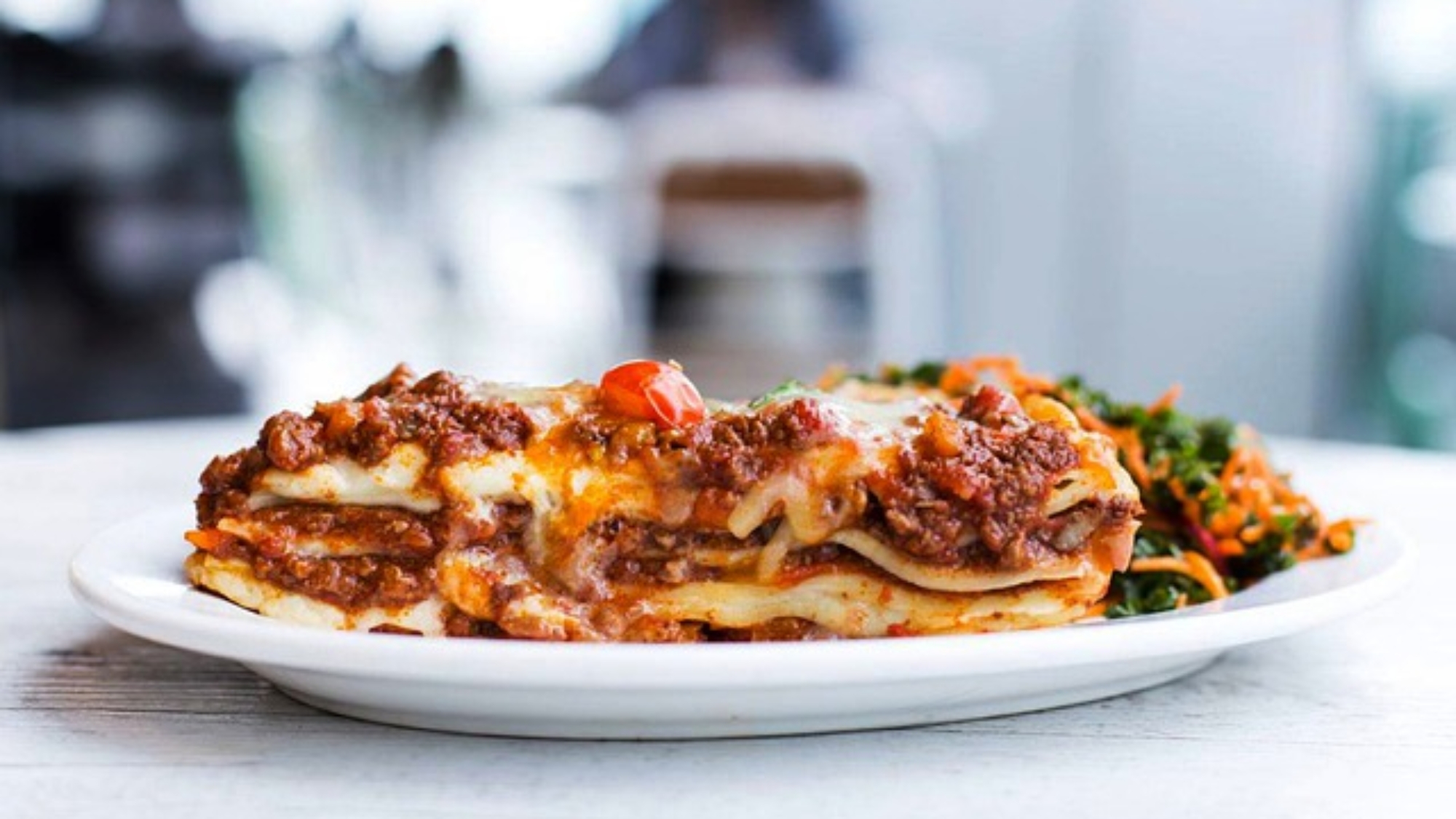
Alternatively, we eat lasagne or cannelloni, great classics of Roman Sunday lunches, with meat sauce or stuffed with artichokes.
The real protagonist of Roman Easter is “abbacchio” the baby sheep that is fed only on its mother’s milk, this makes it particularly tender and sweet meat.
Baked with potatoes, grilled, fried, there are dozens of ways to prepare and enjoy lamb, and they are all delicious.
By now you will be very full, but it’s not over yet….
There is a set of cakes waiting to be eaten!
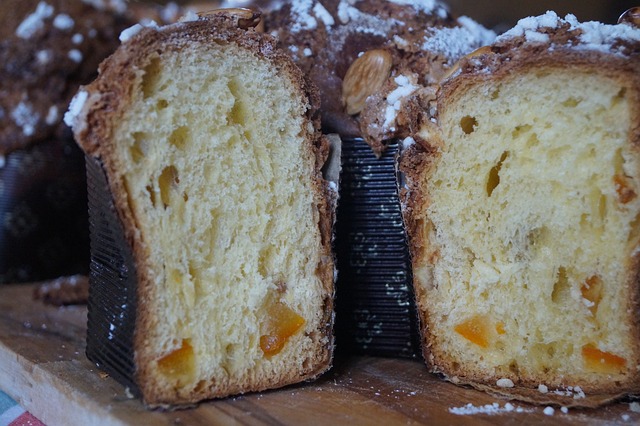
From the classic colomba, artisan or bagged, the choice is yours, it’s still good.
Even if it is not really part of the Roman tradition, the pastiera, a typical Neapolitan traditional Easter cake, made with shortcrust pastry, wheat, ricotta cheese, eggs and the intense scent of orange blossom, is very popular.
At the end of the meal, the little ones open the chocolate eggs, and you certainly can’t resist trying a piece of it.
At this point I imagine you full and satisfied, with your trouser belt loosened, enjoying a good bitter to digest.
Are you ready for another round? Join us for one of our Rome Tours and get the chance to taste on of these delicacies!
When we talk about an amphitheatre, the first thing that comes to mind is the Anfiteatro Flavio, better known as the Colosseum.
But did you know that there are a lot of amphitheatres all over Italy? Among the most famous are the Arena in Verona, the Roman amphitheatre in Trieste and the Roman amphitheatre in Pompeii.
Albano Laziale: a town overlooking Lake Castel Gandolfo
Today we will focus on one of the lesser-known, but still worthwhile sites, the Saverian amphitheatre in Albano Laziale, a town overlooking Lake Castel Gandolfo, where wealthy Roman aristocrats once had villas to escape the summer heat of the city.
The town is entirely part of the Roman Castles Regional Park, and its name derives from Albanum, as the surrounding area was called in Roman times.
The history of Roman Amphitheatres
The term amphitheatre derives from the Greek ‘amfi’ for ‘around’ and ‘theatre’, an elliptical building used for public performances. Amphitheatres were the hub of social life, the venue for gladiatorial shows and ‘venatus’ fights between men and animals. The amphitheatre’s capacity was about 15,000 people.
Gladiators were mainly prisoners of war, criminals or even free men who decided to enter the arena in pursuit of gain or glory.
To all intents and purposes gladiators were slaves, but they had the possibility to gain their freedom during the fights thanks to their courage and strength.
Fighting as a gladiator was not the worst scenario for a prisoner because there were also executions in the arena, such as by sword, by wild beasts or, in the case of serious crimes, by crucifixion.
The structure of the Saverian Amphitheatre
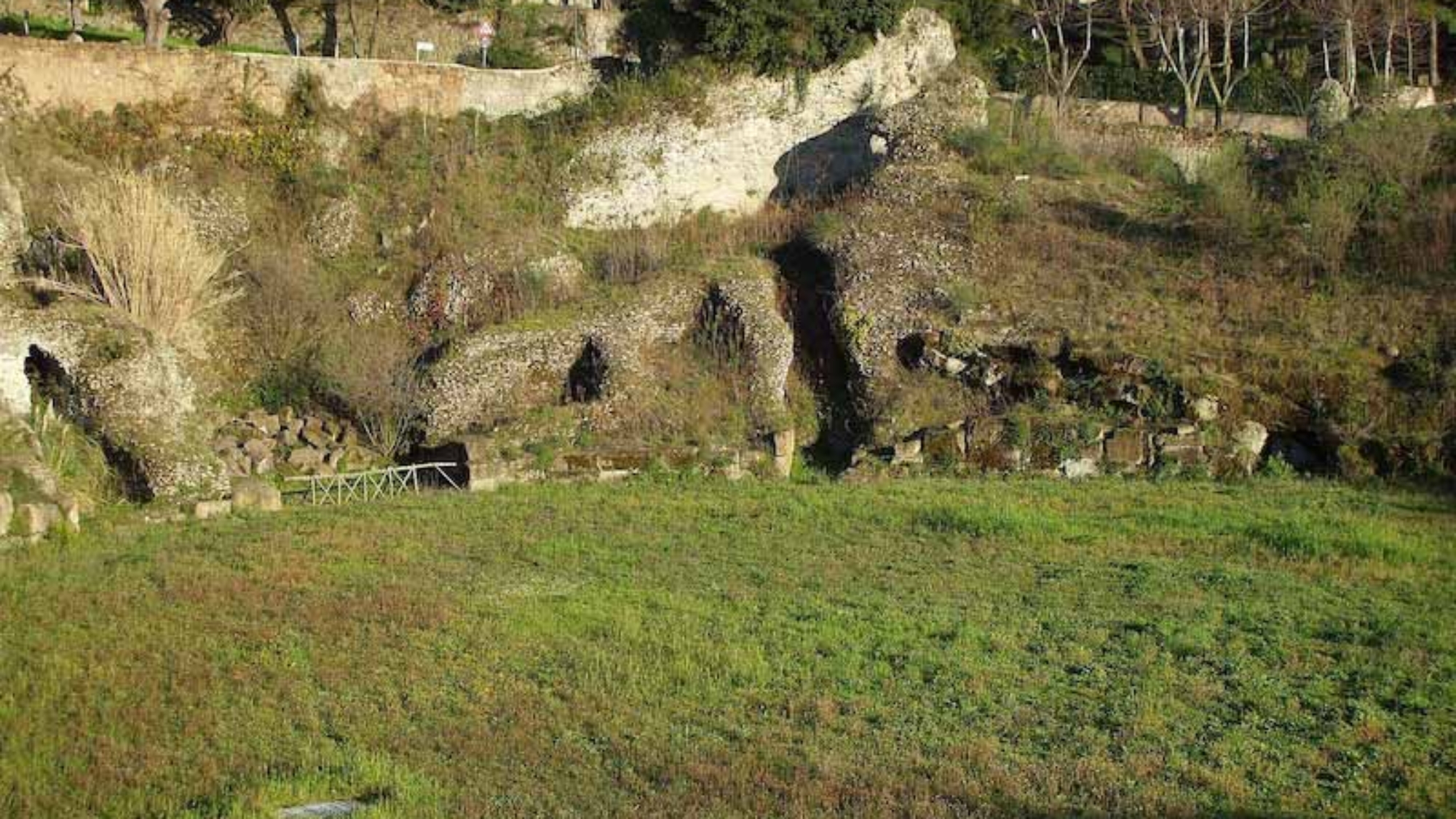
It is interesting to know that the structure of the Saverian amphitheatre is partly built directly from the rocky bank and partly in masonry, and since the ground below was steeply sloping, a substructural terrace was built.
The tiers of seats have been largely lost, but we can assume that they were on two levels and that they were supported by about thirty archways of various sizes, for a total height of about 22 metres.
We can tell this because today the first level and the archways are still visible, together with the cavea and part of the triumphal entrances.
For those of you less interested in history, you can enjoy the summer festival called “Anfiteatro estate” with live performances, Italian musicians and cover bands.
So why not take a trip to the amphitheatre with one of our Castel Gandolfo Tours to appreciate this piece of history or just to enjoy a nice evening with friends?