Rome is not just the Eternal City, famous for the Colosseum, the Imperial Forums, its timeless monuments, and iconic squares. The wonders of the capital aren’t limited to the surface, bathed in sunlight; beneath the bustling streets and historic buildings lies a fascinating and mysterious underground world, filled with secrets, ancient facts, and legends. We are talking about Rome’s catacombs and subterranean spaces, which tell the story of a city that developed not only upward but also downward.
What are the Catacombs?
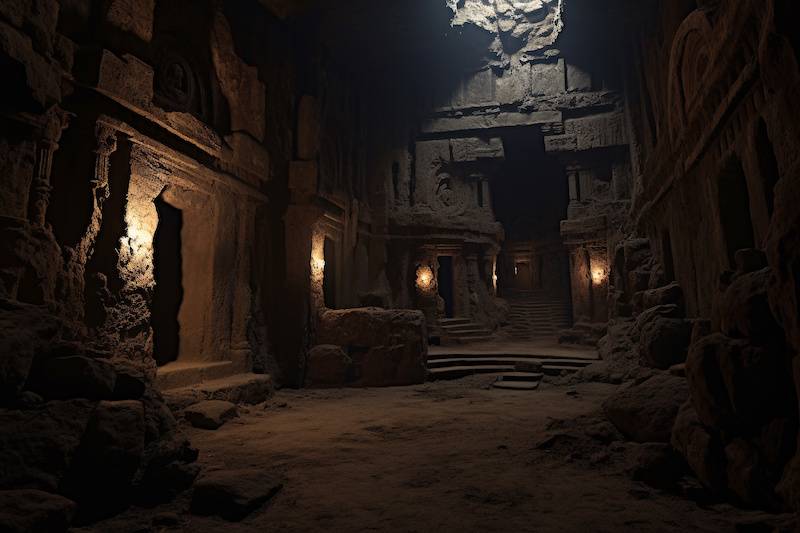
The Roman catacombs are ancient underground burial areas, primarily used by early Christians and Jews, who were prohibited from burying their dead within the city walls between the 2nd and 5th centuries AD. These subterranean labyrinths, carved into the soft volcanic rock known as tuff, stretch for miles underground and are filled with niches, frescoes, and Christian symbols.
The catacombs were not only burial sites but also places of worship where Christians felt safe. In fact, they used these spaces to celebrate Mass and perform rituals away from the watchful eyes of pagan emperors.
Interesting Facts about Rome’s Catacombs
- An Incredible Network of Tunnels: A Record Length! The Roman catacombs stretch over 170 kilometers of underground galleries, with some sections still unexplored and inaccessible to the public.
- Christian Symbolism: Many tunnels contain numerous symbols linked to early Christianity, such as the fish, the bread, the Good Shepherd, and the dove, which discreetly represented the faith of Jesus’ first followers.
- The Bodies of Martyrs: Many catacombs became places of worship because they housed the remains of early Christian martyrs, including Saint Sebastian and Saint Agnes. During the Middle Ages, pilgrims visited these sites, which were considered sacred.
- The Presence of Popes: Some catacombs, such as the one of Saint Callixtus in southern Rome, hold the tombs of early popes and bishops of the Christian Church. A highly symbolic spot is the “Crypt of the Popes,” which contains the burial sites of many 3rd-century pontiffs.
- The Importance of Torches: The catacombs were dark and narrow, so early Christians used small oil lamps to light the dim corridors. In some cases, traces of smoke and soot are still visible on the ceilings, evidence of these lamps’ use.
Must-See Catacombs
If you decide to explore Rome’s underground world, here are some of the most famous catacombs worth visiting:
- Catacombs of Saint Callixtus: Arguably the most famous and visited, they are located on the Appian Way and are among the largest and oldest Christian catacombs. They are particularly known for housing the “Crypt of the Popes.”
- Catacombs of Saint Sebastian: Just a few kilometers from Saint Callixtus, these catacombs are another key stop along the Appian Way. Saint Sebastian was a Roman soldier martyred for his faith, and his remains are kept here.
- Catacombs of Priscilla: Known as the “Queen of the Catacombs,” these catacombs are renowned for their well-preserved frescoes, including one of the earliest depictions of the Virgin Mary.
Conclusion: Rome’s Past Beneath Our Feet
Exploring the catacombs hidden beneath the Eternal City is a fascinating experience that allows you to uncover a less-visited part of the city, far from the daylight but steeped in history and mystery. The Christian catacombs, with their poignant history, hidden symbols, and ancient tombs, offer an astonishing journey through time, beyond what is visible on the surface.