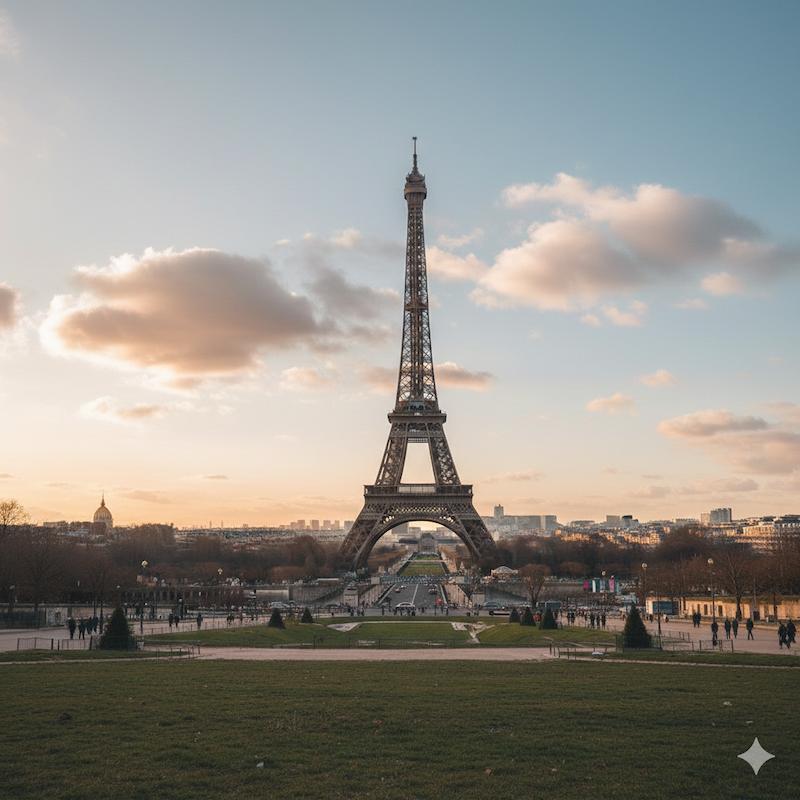
Few monuments in the world feel as permanent as the Eiffel Tower, yet its original destiny was to be dismantled. Built for a specific event and a limited lifespan, the tower survived only thanks to innovation, controversy, and unexpected usefulness.
To understand Paris beyond its iconic image, our Paris tours often explore the stories behind famous landmarks—revealing how chance and resistance shaped the city we see today.
Built for a World’s Fair, Not for Eternity
The Eiffel Tower was constructed for the 1889 Exposition Universelle, celebrating the centenary of the French Revolution. It was never intended to be a lasting monument.
Its planned lifespan was 20 years. After that, it was supposed to be removed.
Parisians Hated It at First
When construction began, many artists and intellectuals protested fiercely. They described the tower as:
-
Ugly
-
Industrial
-
Out of place in historic Paris
Some called it a “monstrosity of iron” that disfigured the city skyline.
Why It Was Almost Demolished
As the 20-year limit approached, the tower faced a real threat of dismantling. Maintenance was expensive, and critics still saw no artistic value in it.
Without a new purpose, the tower’s fate was sealed.
The Unexpected Role That Saved It
The Eiffel Tower found salvation through science and technology. Its height made it ideal for:
-
Radio transmissions
-
Military communications
-
Scientific experiments
As wireless technology advanced, the tower became strategically indispensable.
From Engineering Experiment to National Symbol
Over time, the tower’s image transformed. What was once rejected became familiar, then beloved. Its silhouette slowly embedded itself into Parisian identity.
The tower survived not because it was beautiful—but because it was useful.
A Symbol Born by Accident
Unlike many monuments designed to glorify power or history, the Eiffel Tower became symbolic almost by chance. It represents:
-
Innovation over tradition
-
Modernity over classicism
-
Adaptation over permanence
Its meaning evolved with the city itself.
Why This Story Still Matters
Knowing the Eiffel Tower was meant to be temporary changes how we see it. It reminds us that even the most iconic landmarks are often the result of uncertainty, resistance, and compromise.
Paris’s most famous symbol exists because someone decided not to take it down.
Final Thoughts
The Eiffel Tower stands today not as a planned masterpiece, but as a survivor. Its story reflects Paris’s ability to transform controversy into identity and innovation into tradition.
What was once temporary has become eternal—proving that cities, like monuments, are shaped as much by accident as by design.