cacio-storico-florence-italy

Florence’s Medieval Reenactment: The Brutal Beauty of Calcio Storico

Florence is known worldwide for its Renaissance art, majestic cathedrals, and romantic streets. But every June, the city’s elegant image transforms as locals revive one of Italy’s most dramatic and ancient traditions: Calcio Storico Fiorentino — a historic football game that’s as rough as rugby and as symbolic as a battle.

More than just a sport, Calcio Storico is a spectacle of heritage, pride, and rivalry. Played in historic costumes and held in Piazza Santa Croce, this intense reenactment harkens back to the city’s medieval roots, thrilling both residents and tourists.

If you’re planning a visit to Florence in summer, here’s everything you need to know about Calcio Storico — a fierce blend of history, athleticism, and local identity.

What Is Calcio Storico?

Calcio Storico, or “historic football,” is a traditional Florentine sport that dates back to the 16th century, though its roots stretch as far as Roman times.

It’s played between the four historic districts (quartieri) of Florence:

  • Santa Croce (Azzurri – Blue)
  • Santa Maria Novella (Rossi – Red)
  • Santo Spirito (Bianchi – White)
  • San Giovanni (Verdi – Green)

The game is played in a sand-covered arena in Piazza Santa Croce, surrounded by grandstands and decorated with flags and Renaissance pageantry.

Origins and History

The earliest recorded match of Calcio Storico was played on February 17, 1530, during the siege of Florence by Imperial troops. The citizens played as an act of defiance, turning sport into a powerful political symbol.

Throughout the centuries, the game evolved into a ritual of civic pride. Today, it’s part of Florence’s celebrations for the Feast of San Giovanni (St. John the Baptist), the city’s patron saint.

How the Game Works

Calcio Storico mixes elements of soccer, rugby, wrestling, and bare-knuckle fighting.

The Basics:

  • 27 players per team, no substitutions.
  • The goal is to get the ball into the opponent’s net at the end of the field.
  • The match lasts 50 minutes and is incredibly physical — punches, tackles, and grappling are part of the strategy.
  • Fighters wear traditional costumes and are often trained in martial arts or competitive sports.

The “Chianina” Moment:

Before the match begins, a parade of flag throwers, drummers, and costumed figures marches through Florence in full Renaissance attire — a stunning prelude that adds depth and color to the event.

What Makes It So Special?

  • Authenticity: It’s one of the oldest sporting traditions still practiced today.
  • Intensity: The matches are brutal, but the respect between players and neighborhoods is deeply rooted.
  • Atmosphere: The whole city gets involved. Streets are filled with flags, music, and chants.
  • Cultural Identity: For Florentines, it’s not just a game — it’s a living piece of their heritage.

When and Where to See It

The main event takes place in June, with semi-finals and a final match around June 24, coinciding with Florence’s Feast of St. John.

Matches are held in Piazza Santa Croce, transformed with grandstands, sand, and full medieval decor.

Tickets sell out fast, and locals have priority — so it’s best to book early or join an organized tour that includes access.

Tips for Tourists

  • Dress for the heat: June can be very warm in Florence.
  • Arrive early: Piazza Santa Croce fills up quickly on match days.
  • Respect the tradition: This is not a staged performance — emotions run high, and the game is taken seriously.
  • Capture the parade: Even if you don’t attend the match, the pre-game procession is free and spectacular.

Conclusion: A Tradition Worth Witnessing

Calcio Storico is more than a game. It’s a window into the soul of Florence, where tradition, rivalry, and resilience come alive in the heart of the city. For visitors, it’s a chance to see history not in a museum, but lived in the streets, surrounded by drums, flags, and raw energy.

If you’re in Florence in June, don’t miss the chance to witness one of Europe’s most powerful and passionate medieval reenactments.

bastille day paris france

Bastille Day in Paris: 10 Fascinating Facts About France’s July 14 Celebration

Every year on July 14, Paris bursts into color, music, and celebration for La Fête Nationale—known to many tourists as Bastille Day. If you’re in the city during this time, expect an unforgettable experience of parades, fireworks, traditional dances, and deep patriotic spirit.

But what does this holiday truly represent for the French? Why is it celebrated on this specific date? In this article, you’ll uncover the historic roots, modern customs, and 10 interesting facts that will enhance your tour of Paris during this iconic celebration.

The Origins of Bastille Day

France’s National Day commemorates the Storming of the Bastille on July 14, 1789, a defining moment at the start of the French Revolution. That day, Parisians attacked the Bastille prison, a symbol of royal authority. Though only seven prisoners were held, the fall of the Bastille marked the beginning of the end for absolute monarchy and the birth of the principles of liberté, égalité, fraternité.

How Parisians Celebrate July 14 Today

1. The Champs-Élysées Military Parade

The day begins with a prestigious military parade on the Champs-Élysées, attended by the President of the Republic. It features armed forces, cavalry, marching bands, and a sky performance by the Patrouille de France, leaving red, white, and blue trails overhead.

2. Fireworks at the Eiffel Tower

The highlight of the night is the fireworks show at the Eiffel Tower, best viewed from Trocadéro, Champ de Mars, or along the Seine. The breathtaking spectacle draws tens of thousands of spectators each year.

3. Firemen’s Balls (Bals des Pompiers)

In a beloved tradition, Parisian fire stations open their doors for public dances and festivities, welcoming locals and tourists alike to party late into the night.

10 Fun Facts About Bastille Day

  1. It’s not called “Bastille Day” in France – The French simply refer to it as “La Fête Nationale.”
  2. The only annual military parade in Europe – France hosts Europe’s largest regular military parade.
  3. The Bastille no longer exists – It was demolished after the Revolution; today it’s Place de la Bastille.
  4. The first official celebration was in 1790 – A unity event called the Fête de la Fédération.
  5. It’s a public holiday across France – Offices, shops, and services often close or run limited hours.
  6. The national anthem is everywhereLa Marseillaise echoes from parades, radios, and concerts.
  7. Museums often offer free entry – Including top sites like the Louvre and Musée d’Orsay.
  8. Fireworks themes change each year – Often reflecting historical events or cultural topics.
  9. Firemen’s Balls began in 1937 – Originally a fundraising idea that turned into a beloved tradition.
  10. Neighborhoods host local celebrations – Parks, rooftops, and squares come alive with music and dancing.

Best Places to Experience July 14 in Paris

LocationExperience
Champs-ÉlyséesMorning military parade
TrocadéroBest Eiffel Tower fireworks view
Champ de MarsFree evening concert and fireworks
Place de la BastilleSymbolic site of revolution and celebration
Local fire stationsFestive Firemen’s Balls

Conclusion: A Day to Discover France’s Soul

July 14 is more than a historical celebration — it’s an emotional and patriotic expression of national identity. On this day, Paris becomes a stage where unity, tradition, and joy come together.

If you’re in Paris during Bastille Day, don’t miss the chance to experience France at its most vibrant. Join the locals, enjoy the fireworks, dance with firemen, and become part of history in the making.

pantheon rome

Why April 21st at the Pantheon Is a Must-See in Rome

The Unique Moment When the Sun Illuminates the Pantheon Like a Divine Spotlight

Every year on April 21st, something magical happens in Rome: a beam of sunlight perfectly aligns to illuminate the grand entrance of the Pantheon, one of the most iconic buildings in history. This celestial phenomenon is not only a spectacle of ancient architectural genius but also a symbolic celebration of the birth of Rome.

The Pantheon: A Temple to the Gods and to Light

Built around 126 AD under the reign of Emperor Hadrian, the Pantheon in Rome is a masterpiece of engineering. Originally dedicated to all the Roman gods, it later became a Christian church, which helped preserve it through the centuries. Its most striking feature is the Oculus. A 9 meter wide circular opening at the top of its massive dome.

This isn’t just a source of natural light; it’s a spiritual connection to the heavens. At noon on April 21, sunlight streams through the oculus and directly illuminates the bronze entrance doors, bathing them in light for about two minutes and fifty seconds. This isn’t a coincidence; it’s an intentional design feature that ties the building to cosmic rhythms and imperial symbolism.

Don’t miss any of Rome’s must-see places. Book the tour of “Rome in day” where you will visit them all with pre-reserved access. https://www.journeystoitaly.com/tour/rome-in-a-day-family-experience/

Why is April 21 so important?

The Birth of Rome or “Natale di Roma” marks the legendary founding of Rome in 753 BC by Romulus. The alignment of the sun with the Pantheon’s doorway on this date may have served as a powerful statement about Rome’s divine origins and the emperor’s role as a bridge between mortals and gods.

This solar event, combined with the grandeur of the Pantheon, reminded the citizens of Rome of their city’s greatness and cosmic destiny. A practical piece of imperial propaganda, wrapped in light and architecture.

Why You Should See It

Rome is such a landmark; being humble is something important, but being Roman for sure has a plus. This city has a strong character and unique energy. It doesn’t matter when you decide to visit, the city will surprise you with its breathtaking monuments or special events on important dates.

That’s why visiting the Pantheon on April 21st offers more than a typical tourist experience. It’s a moment when history, science, and spirituality converge. If you’re in Rome during April, don’t miss this event, but go early. Crowds gather well before noon to witness the phenomenon, and the atmosphere is electric with reverence and awe.

Tips for Visiting the Pantheon on April 21

Arrive early to get a good viewing spot inside.
• Bring a camera or phone to capture this once-in-a-year moment.
Book your entry in advance if you visit during the high season; the Pantheon now has an entrance fee.
• Pair your visit with a walk-through of Piazza della Rotonda, where you’ll find cafes, music, and vibrant Roman life.

Now you know, and if you didn’t, you might have the luck to be in the city on this day.

Enjoy Rome, and let the city surprise you.

Experience the ideal italian breakfast  fresh croissants, aromatic coffee, and vibrant fruits

A Day in Rome on a Budget: The Best Food You Can Get for 15 Euros

For many people that come to Rome, it can be a really expensive trip. Coming from countries outside of Europe, could represent spending 500 euros or more on flights back and forth, and this is per person. Then you have to sum up visiting monuments, hotels and additional experiences.

This is why, today we bring you a full guide on how to save money on your trip, this time, how to eat in Rome for 15 euros!

Breakfast

So let’s begin, first thing first. The breakfast and this time Italian style.

If you didn’t know, Italians don’t eat breakfast like most people around the world. They don’t have the typical bread and eggs, toasts and sausages, bowl of cereal or any of these American style foods.

For Italians, breakfast is three things: Sweet, fast and small. The typical way to eat here is to wake up, grab a coffee at home if you want, and then right before starting to work, stop at your local bar (cafeteria), and order a cornetto (croissant) and any type of coffee, it could be espresso, long coffee or cappuccino. The pastry could change also, for a mini donut or a classic cannoli.

Sweet pastry: 1.5 EUR
Coffee: 1 – 1.5 EUR

Breakfast: 3 EUR

Recommended place: “Caffe dei Papi” – right next to our Vatican office. Via Vespasiano 28.

Rome in a day? Enjoy our full day tours in the city – https://www.journeystoitaly.com/tour/tour-of-rome-in-a-day-for-cruisers/

Lunch

Now after a long walk and sightseeing in the center of Rome, it is time for lunch.

This is one of the most important and ceremonial times for Italians, traditionally people can stop working for almost 2 hours in order to have enough time to properly enjoy their food.

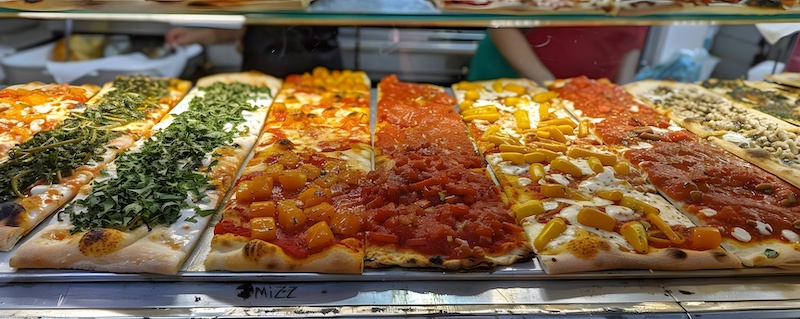
For lunch you can go to a pizza place, and order like a true Italian, the “Pizza al Taglio”, which is to order the flavors you want of pizza in the exact amount you want, then you just pay the value of each flavor based on its weight.

Pizza: 5 EUR

Gelato

Now before dinner, of course it is necessary to make another stop to try some Italian “Gelato”.

For this option we want to give you two ways to do it. On average the price of a good quality Gelato goes from 2 to 3 euros, avoid buying it near monuments because Gelato can go up to 7 euros!

1st option – Go to San Calisto bar in Trastevere. Here for 3 euros you can have a good beer and a simple vanilla ice cream.

2nd option – Go to “Gelateria La Romana”. A great place to grab a good gelato and take a seat to rest and charge your phone.

Gelato: 2 EUR average.

Dinner

Now to finish the day, we got 5 more euros to spend, the exact amount to enjoy one of Rome’s most trendy spots, “Trapizzino”.

The famous fried pizza pocket. A delicious dish in the city, you can choose from their 5 flavors, we recommend the “Pollo alla cacciatora” and “Polpetta al Sugo”.

Trapizzino: 5 EUR

There you go, 15 euros per person.

With this recommendation you can save money to enjoy the experiences inside the city. We understand that the Eurotrip is a dream but what better to enjoy even more saving up money like a local.

gucci museum florence

Contemporary Art in Florence: A Guide to Modern Museums

Italy is a country known for its rich artistic background. The country has been the place of birth of great artists, like Leonardo Da Vinci, Michelangelo and Bernini. But, what about modern and contemporary art? Are there museums that expose the new wave of artists in Italy? Is there something else besides visiting the amazing and unique ancient museums?

The answer is yes. There are modern museums in Italy, and today we will tell you about the ones in Florence, the city of artists. For sure when we ask these questions, the obvious answer is “yes, there is modern art everywhere”, but in Italy it is something that needs to be exposed even more.

In cities like Florence, that host art pieces that are famous worldwide, it is a bit difficult to direct the attention to new artists and value them in their time.

That’s why today we bring a brief guide of contemporary art in Florence. A new face of the city that not everyone knows, a way to enjoy your time and mix the past with the present.

Step inside the real Florence daily life with the walking tour in the city

If you are spending more than one day in Florence this guide is for you for sure or if you just need a refreshing experience on your trip.

Museo Novecento

Dedicated to the Italian art of the 20th and 21st centuries. This museum has a permanent collection and offers other temporary exhibitions. A museum built in an ancient hospital from the 13th century. From March 14th to June 11th, there will be a wonderful exhibition by Thomas J Price.

Palazzo Strozzi

For sure the best example of modernity, this museum screams new and provocative from the aesthetics of the rooms and the artists they showcase. A place for celebrated and actual artists, such as Maria Abramovic, Ai Weiwei, currently exhibiting the work of Tracey Emin, named “Sex and Solitude” and soon they will host “Time for Women”, a celebration of the 20 years of Max Mara Art Prize for Women.

Palazzo Gucci

From the brand Gucci, which was founded in Florence, there is a whole building dedicated to celebrating the brand’s history, with its cafe, restaurant, boutique and museum. Inside there is an exhibition of the most iconic pieces and the story behind them. What is interesting, is the way it is built, as each one of its rooms has so much creativity, elegance and technology.

As these exhibitions, there are many more in Florence. It is true that going to the classic places is a must, but just in case you have a different taste or you don’t want to make long lines, then mixing your day with other beautiful and artistic museums is a great option. Enjoy the “City of Artists”. Welcome to Flore

villa-borghese-rome-italy

Villa Borghese and Pincio Terrace: The Ultimate Green Escape in the Heart of Rome

If someone asks you to describe Rome in five words? or, What comes to your mind when you think about Rome? What would you say?

For sure in the top 5 things, The Colosseum, Trevi Fountain, Pantheon, St Peter’s and the Vatican are the ones that come up first. And, if you describe Rome, the answer usually is also antic, Roman Empire, Gladiators or something related to the weight of the history behind it.

Book a whole day enjoying these renowned monuments, skipping lines and stress free of handling the details in your experience: https://www.journeystoitaly.com/tour/7-hours-rome-in-a-day-private-walking-tour/

Well, yes those answers are pretty accurate and for sure those places are the pride of the city and the whole country, but Rome is a privileged city that has hidden gems and historic monuments that can be something different from what people usually expect.

Here we want to show you a different option if you are a nature lover and also enjoy a break from the city. After a whole day walking, there is a place with a huge area to rest and grab one of the best views in Rome.

Villa Borghese

One of the biggest open and green areas in Rome, right in the heart of the city is this 80 hectares of land. Inside you will find open roads to jog or walk, museums like the Galleria Borghese, one of Rome’s most celebrated art museums. Housed in a stunning 17th-century villa, the gallery boasts an impressive collection of sculptures by Bernini, paintings by Caravaggio, and other Renaissance masterpieces.

Inside there is also a lake, with ducks and swans, you can rent a boat and enjoy the whole lake with your loved ones. This lake has seen so many happy moments, like marriage proposals, gender reveals and birthdays. It is such a beautiful spot to create those core memories.

Pincio Terrace

Located on the edge of the park. From here, you’ll see a panoramic view of Rome, including St. Peter’s Basilica and the Vatican. It’s a fantastic spot to watch the sunset or enjoy a serenade of a local singer. Soak in the beauty of the Eternal City.

Villa Borghese is full of surprises

Discover its hidden gems, such as:

  • The Temple of Asclepius, a small but picturesque temple located on the lake’s island.
  • Bioparco di Roma, a family-friendly zoo within the park.
  • Catch a performance at the Silvano Toti Globe Theatre, a replica of Shakespeare’s Globe Theatre.

So, pack a picnic, grab your camera, and head to Villa Borghese this spring. Whether you’re exploring its cultural treasures or simply enjoying the beauty of its gardens, this enchanting park promises an unforgettable escape in the heart of the city.

Paris Clubs and Parties

Best Things to Do in Paris at Night: Top Bars, Clubs and Dinner Spots

No more jackets or rain, it is time to move more comfortably and enjoy the sun. Remember we got you for the Eiffel Tower experience, book our tour to climb up to the Summit to see the best view in the city. But, what else can you do in Paris besides visiting the famous sites?

Here we have some places to go out to eat or party in this amazing city.

Nightlife

Les Etoiles

The Théâtre des Etoiles is a vibrant multicultural venue that celebrates all musical genres through concerts, events, and performances, the motto is simple: Discover and enjoy!

Rex Club

Electro and Techno – Budget friendly

Near Grands Boulevards there is a paradise for students passionate about electro and techno, Rex Club, renowned for its top-notch sound system and legendary DJs line-up.

38riv Jazz Club

38Riv Jazz Club is an intimate jazz venue set in the 13th-century, located on Paris’s Right Bank, just steps from Notre Dame Cathedral. This unique space hosts live Jazz, Funk, and Brazilian music concerts, along with jam sessions (Jazz & Groove) and exclusive closed-door sessions for emerging young talent.

You can always enjoy Paris neighborhoods, each one of them has its own energy at night. One of the best options to wander and grab something to eat or drink is Belleville, a good side track for tourists that want to see real Parisian life. Comfortable and chill cafes, if you want a cocktail go to Mino, the owner was awarded with the “World’s best mixologist”, so expectations can be high!

Where to go for dinner?

Price-Friendly

Chez Nicos

Crepes and Sandwiches for a great price that go between 4 and 6 euros, perfect to save more money to enjoy the rest of the experiences inside the city.

Bistrot Instinct

A mid-range price restaurant, simple menu that offers you the starter, main dishes, and the dessert “made for the week.” Easy to choose, discover new flavors in this top 20 rated experience on TripAdvisor.

There you go, short and simple. No need to second guess with a long list of options. We made it easy for you, live in Paris in the most unique and special way.

What are you waiting for to create those memories with your loved ones?

murano-glass-making-venice

The Art of Venetian Glass: The Timeless Charm of Murano

Venice is a city rich in history and traditions, but among its most fascinating wonders stands the art of Murano glass. For centuries, the master glassmakers of this island have transformed sand into extraordinary works of art, following techniques passed down from generation to generation. If you want to discover the secrets of this fascinating craft, a tour of Murano is an unmissable experience.

An Ancient Venetian Tradition

Glassmaking in Murano has ancient origins, dating back to the 13th century when the Republic of Venice decided to move all furnaces to the island to prevent fire hazards in the city and protect production secrets. Since then, Murano has become the beating heart of an art that has made Venice famous worldwide.

Visiting the Furnaces: A Journey into the Heart of Creation

By joining a guided tour, you will have the opportunity to visit the historic furnaces of Murano, where master glassmakers skillfully shape glass. During the visit, you can witness glassblowing, a technique that creates elegant and lightweight forms, giving life to goblets, chandeliers, and unique sculptures.

Glass Museum: A Dive into History

To fully understand the evolution of this art, a must-visit is the Murano Glass Museum. Here, you can admire extraordinary pieces, from ancient Renaissance creations to contemporary works, and discover how glassmaking techniques have evolved over time.

Exclusive Shopping: Take Home a Piece of Murano

A trip to Murano wouldn’t be complete without a visit to artisan workshops, where you can purchase authentic glass masterpieces. From refined jewelry to elegant home décor, each piece tells a story of craftsmanship and passion. Beware of imitations: trust certified stores to ensure you get an original piece.

A Unique Experience with Our Exclusive Tours

Do you want to experience the magic of Murano glass up close? Our agency organizes Venice private and group tours to explore the art of glassmaking, including visits to furnaces, live demonstrations, and the possibility of customizing your itinerary. Contact us to book your experience and be enchanted by the timeless charm of Murano!

vatican gardens rome

The Secrets of the Vatican Gardens: How to Book an Exclusive Tour

Rome is a city that never ceases to amaze, and among its hidden treasures are the magnificent Vatican Gardens. A place of extraordinary peace and beauty, away from the hustle and bustle of the city, where art, history, and spirituality blend harmoniously.

If you wish to discover this secret corner of the Vatican, the best solution is to book a private tour that will allow you to enjoy a unique and stress-free experience.

Why Visit the Vatican Gardens?

The Vatican Gardens are one of the most exclusive areas of Vatican City, accessible only through guided tours. Spanning approximately 23 hectares, these gardens offer a journey through centuries of history and breathtaking landscapes.

Walking along their paths, you can admire:
Monumental fountains
Sculptures and grottoes
Centuries-old trees
Stunning views of St. Peter’s Dome

Beyond their artistic beauty, the Vatican Gardens hold profound symbolic and spiritual value: for centuries, they have been a place of meditation and rest for the Popes, an oasis of tranquility in the heart of the Vatican.

How to Book an Exclusive Tour

Access to the Vatican Gardens is regulated and only allowed with an official guided tour. Here are some tips on how to book your private tour:

1️⃣ Choose a Private Tour

Opting for a private tour allows you to enjoy a personalized experience, with an expert guide dedicated solely to you and your group. This means delving deeper into the curiosities that interest you the most, without rush and with maximum comfort.

2️⃣ Book in Advance

Available spots are limited, and demand is high, so it is crucial to book early to ensure a seamless experience.

3️⃣ Rely on a Specialized Agency

An agency with experience in organizing private tours in Rome can take care of every detail, ensuring:
Impeccable service
Priority access
A certified guide who will make the visit even more fascinating

4️⃣ Combine the Tour with Other Experiences

To make your day even more special, you can combine the visit to the Vatican Gardens with a tour of the Vatican Museums and the Sistine Chapel, for an immersive experience in the heart of Vatican culture and history.

An Unforgettable Experience

Exploring the Vatican Gardens means stepping into an exclusive world, away from the crowds, where nature and art coexist in perfect harmony.

With a Vatican private tour, you will have the opportunity to enjoy every hidden detail, with all the calm and attention it deserves.

If you want to discover the Vatican’s most secret face, trust our expertise in organizing private tours in Rome.

Book your private tour of the Vatican Gardens today and experience an unforgettable journey in the Eternal City!

ghost-tour-rome-benefit2

Ghost Stories of Rome: Haunted Sites and Legends

Rome is not only one of the most fascinating cities in the world, known for its millennia-old history, but also a place where ancient legends and ghost stories come to life. Among dark alleys, noble palaces, and ancient cemeteries, eerie tales whisper through the streets of the Eternal City. If you love mystery and the supernatural, a private ghost tour of Rome is the perfect way to experience something truly unforgettable.

The Ghost of Beatrice Cenci

One of Rome’s most famous legends is that of Beatrice Cenci, a young noblewoman beheaded in 1599 for the murder of her abusive father. It is said that every year, on the night between September 10th and 11th, her ghost appears on Ponte Sant’Angelo, holding her severed head, forever haunting the site of her execution.

Palazzo Doria Pamphilj and the Restless Soul of Olimpia Maidalchini

Olimpia Maidalchini, better known as “La Pimpaccia”, was a powerful and ambitious woman of the 17th century. According to legend, her spirit still roams the halls of Palazzo Doria Pamphilj and along Via del Corso in a black carriage, desperately trying to escape with her stolen riches.

The Colosseum and the Spirits of the Gladiators

One of the most famous yet eerie places in Rome is undoubtedly the Colosseum. This ancient amphitheater witnessed brutal gladiatorial combats and gruesome executions. Many visitors and night guards have reported hearing the clash of swords, distant screams, and even shadowy figures moving among the ruins.

The Ghost of Donna Olimpia on Ponte Sisto

Another haunted bridge in Rome is Ponte Sisto, where the ghost of Donna Olimpia Pamphilj is said to appear. Wrapped in a black cloak, her spectral figure is believed to cross the bridge on stormy nights in a phantom carriage drawn by horses, only to vanish into thin air before reaching the other side.

Why Choose a Private Ghost Tour in Rome?

A private ghost tour allows you to enjoy an exclusive and immersive experience, guided by an expert storyteller who will take you through Rome’s most haunted locations, sharing spine-chilling tales and eerie anecdotes.

If you’re ready to explore the dark side of Rome, join us for an unforgettable night of mystery and legends. Book your private tour now and let yourself be enveloped by the ghostly atmosphere of the Eternal City!