Why the Pantheon Is One of Rome’s Greatest Monuments
Among the countless landmarks that define the Eternal City, few are as impressive as the Pantheon Rome. Located in the heart of the historic center, this extraordinary monument has survived nearly two thousand years and remains one of the best-preserved buildings of Ancient Rome.
Originally built as a temple dedicated to the Roman gods, the Pantheon continues to amaze visitors with its perfect proportions, engineering innovations, and remarkable history.
Today, it is one of the most visited attractions in Rome and an essential stop for anyone exploring the city’s rich cultural heritage.
The Fascinating History of the Pantheon
Who Built the Pantheon?
The original Pantheon was commissioned by Marcus Agrippa during the reign of Augustus around 27 BC.
However, the structure visible today was rebuilt by Emperor Hadrian between 118 and 125 AD after the original building was damaged by fire.
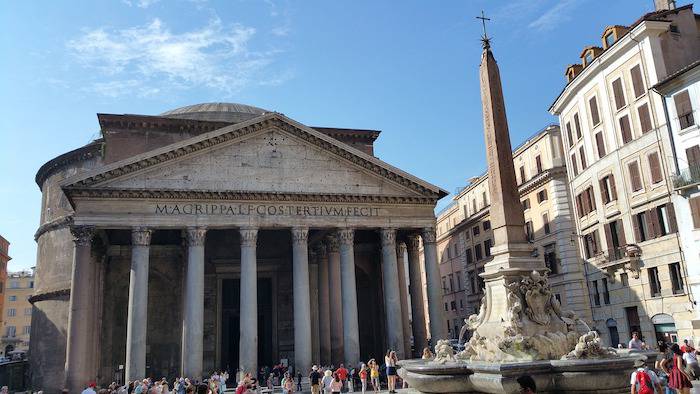
Despite the reconstruction, Hadrian chose to preserve the original inscription on the façade:
“M·AGRIPPA·L·F·COS·TERTIVM·FECIT”
which translates as:
“Marcus Agrippa, son of Lucius, built this during his third consulship.”
Why Was the Pantheon Built?
The name “Pantheon” derives from Greek and means “temple of all gods.”
Although historians still debate its exact religious function, the building likely served as an important ceremonial space connected to imperial power and Roman religion.
How Did the Pantheon Survive?
Unlike many ancient monuments, the Pantheon was converted into a Christian church in the 7th century.
This transformation helped preserve the structure while many other Roman temples fell into ruin.
What Makes the Pantheon So Extraordinary?
The Largest Unreinforced Concrete Dome in the World
The Pantheon is famous for its massive dome, which remains the largest unreinforced concrete dome ever built.
Nearly 2,000 years after its construction, engineers still study its design.
The Perfect Sphere
One of the building’s most remarkable features is its geometry.
The diameter of the dome and the height of the interior are almost identical, creating a perfect sphere that could theoretically fit inside the structure.
The Oculus
At the center of the dome lies the famous oculus, a circular opening measuring approximately 9 meters across.
The oculus serves as the building’s primary source of natural light and creates spectacular lighting effects throughout the day.
Visitors interested in unusual architectural details may also enjoy learning why the Pantheon has a hole in the roof, one of the monument’s most fascinating features.
Pantheon Rome Tickets Explained
Do You Need Tickets to Enter the Pantheon?
Since 2023, visitors are generally required to purchase a ticket to enter the Pantheon.
Ticket policies may change, so it is always advisable to verify current information before your visit.
Should You Book in Advance?
Booking in advance is strongly recommended during:
- Spring
- Summer
- Public holidays
- Long weekends
Advance reservations can significantly reduce waiting times.
Guided Tours vs Independent Visits
A Rome guided tour can help visitors better understand:
- The building’s history
- Architectural innovations
- Religious significance
- Hidden details often overlooked by tourists
Best Time to Visit the Pantheon
Early Morning Visits
The quietest time to visit is usually shortly after opening.
Benefits include:
- Smaller crowds
- Better photographs
- More peaceful atmosphere
Visiting During Rain
Many visitors hope to experience the famous effect of rain entering through the oculus.
Although rain falls directly into the building, the floor’s drainage system quickly removes water.
The Most Magical Day of the Year
One of the most extraordinary moments occurs around April 21st, traditionally celebrated as Rome’s birthday.
On this day, sunlight entering through the oculus creates a remarkable visual effect inside the monument.
Hidden Details Most Visitors Miss
Raphael’s Tomb
The Pantheon serves as the final resting place of several important historical figures, including the Renaissance artist Raphael.
His tomb remains one of the building’s most visited features.
The Ancient Bronze Doors
The massive entrance doors are among the oldest surviving bronze doors still in use today.
The Floor Design
Many visitors focus exclusively on the dome and overlook the intricate marble floor beneath their feet.
The floor incorporates subtle slopes that direct rainwater toward hidden drainage channels.
The Light Show Created by the Oculus
Throughout the day, sunlight moves across the interior like a giant sundial, transforming the atmosphere of the building hour by hour.
Photography Tips for Visiting the Pantheon
Best Time for Photos
The best photography conditions generally occur:
- Early morning
- Late afternoon
Photographing the Dome
To capture the dome:
- Use a wide-angle lens if available
- Stand near the center of the building
- Look for natural light effects created by the oculus
Best Exterior Views
Excellent exterior photo opportunities can be found in:
- Piazza della Rotonda
- Side streets surrounding the Pantheon
- Nearby rooftops and terraces
What to See Near the Pantheon
One of the advantages of visiting the Pantheon is its central location.
Several of Rome’s most famous attractions are within walking distance.
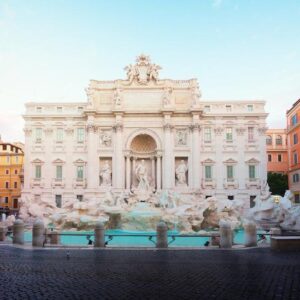
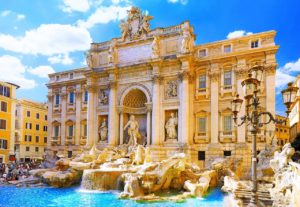
Trevi Fountain
One of Rome’s most iconic landmarks, famous for its Baroque design and coin-throwing tradition.
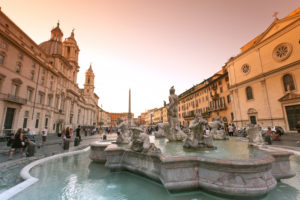
Piazza Navona
A beautiful square featuring fountains, cafés, and some of the finest examples of Baroque architecture.
Campo de’ Fiori
A lively market square popular with both locals and visitors.
The Jewish Ghetto
One of Rome’s most fascinating historic districts, known for its rich history and exceptional food culture.
Frequently Asked Questions About the Pantheon
How long does it take to visit the Pantheon?
Most visitors spend between 30 minutes and 1 hour exploring the monument.
Is the Pantheon worth visiting?
Absolutely. The Pantheon is one of the most important and best-preserved monuments of Ancient Rome.
Can you visit the Pantheon for free?
Ticket policies may vary, so visitors should verify current regulations before arrival.
What is the best time to visit?
Early morning generally offers the best experience with fewer crowds.
Why is there a hole in the roof?
The oculus provides natural light, reduces structural weight, and contributes to the building’s unique architectural design.
Final Thoughts
The Pantheon Rome is much more than an ancient temple. It is a masterpiece of engineering, a symbol of Rome’s enduring legacy, and one of the most extraordinary buildings ever constructed.
Whether you are fascinated by Roman history, architecture, photography, or simply exploring the city’s historic center, a visit to the Pantheon remains one of the most rewarding experiences in Rome.