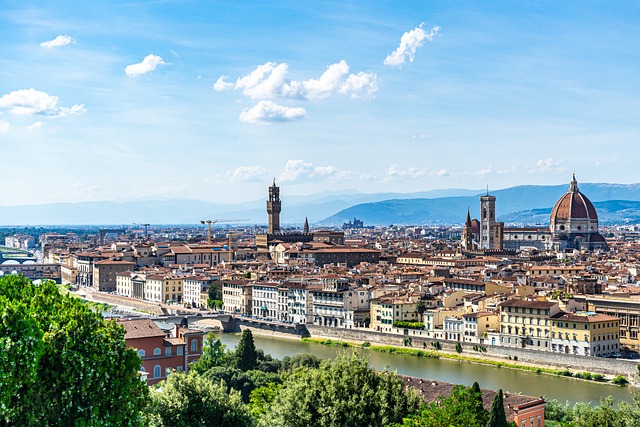
Florence is not only the cradle of the Renaissance but also the birthplace of Italian literature. Its medieval streets echo with the words of Dante Alighieri and Giovanni Boccaccio, two writers who transformed the Italian language and immortalized the city in their works. Walking through their neighborhoods, you can still sense the world that inspired their verses and stories.
To explore this side of the city with expert guides, our Florence tours include literary-themed walks that retrace the paths of Dante, Boccaccio, and the origins of the Italian language.
Dante’s Florence: The Poet’s City
Dante was born in 1265 in Florence, in what was then a bustling medieval commune. Many of the streets he knew still exist, their narrow alleys and stone houses retaining the atmosphere of the time.
Casa di Dante
In the heart of the old city, near Via Santa Margherita, stands the Casa di Dante, a museum dedicated to the poet’s life and works. It reconstructs the medieval environment and preserves manuscripts, maps, and relics connected to the Divine Comedy.
Chiesa di Santa Margherita dei Cerchi
Just a few steps away, this small church is associated with Beatrice Portinari, the woman Dante loved and celebrated in his poetry. Tradition says that visitors can leave messages of devotion here, following Dante’s timeless expression of love.
Piazza della Signoria and the Guilds
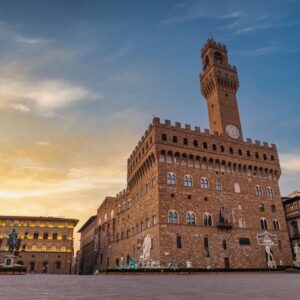
Dante was deeply involved in the political life of Florence. A walk through Piazza della Signoria and the surrounding streets reveals the power struggles of his time—conflicts between Guelphs and Ghibellines that ultimately led to his exile.
Boccaccio’s Florence: Stories of Everyday Life
A century later, Giovanni Boccaccio captured a different side of Florence—its humor, humanity, and complexity—through his masterpiece, the Decameron.
Santa Maria Novella
According to tradition, this is where the ten young protagonists of the Decameron met before fleeing to the countryside to escape the plague. The basilica’s cloisters still evoke the atmosphere of reflection and storytelling that shaped Boccaccio’s narrative.
Certaldo: The Writer’s Retreat
Just outside Florence lies Certaldo, Boccaccio’s birthplace and final home. The medieval village, perfectly preserved, offers an intimate look into his life. His house, now a museum, holds manuscripts and editions of his works. Visiting it feels like stepping into the quiet world of a 14th-century humanist.
Literary Florence Beyond the Monuments
Beyond specific sites, the entire historic center of Florence can be read as a living manuscript.
-
The narrow lanes around Via del Corso still recall the atmosphere of medieval storytelling.
-
The Biblioteca Nazionale Centrale preserves some of the oldest manuscripts of Dante and Boccaccio.
-
Small plaques around the city quote verses from the Divine Comedy, transforming Florence itself into a poem in stone.
Tips for a Literary Walk in Florence
-
Start early morning: The streets are quieter, allowing you to imagine medieval Florence more vividly.
-
Bring a copy of Dante or Boccaccio: Reading passages in the very places they describe adds depth to the experience.
-
Combine art and literature: Many frescoes in Florentine churches depict scenes inspired by Dante’s Inferno and Paradiso.
Final Thoughts
Following in the footsteps of Dante and Boccaccio means walking through the soul of Florence itself—a city where art, faith, and words blend into a timeless narrative. Each street, tower, and square recalls verses that shaped the Italian language and continue to inspire visitors centuries later.